Research Article | | Peer-Reviewed

Dietary Practices and Nutritional Status of Hemodialysis Patients in Meru County

Received: 7 July 2025     Accepted: 22 July 2025     Published: 13 August 2025
Views:       Downloads:
Abstract

The increasing prevalence of chronic kidney disease (CKD) imposes a huge healthcare burden on developing countries. For patients undergoing hemodialysis (HD), optimal nutritional management is associated with better treatment outcomes and quality of life. However, malnutrition is commonly reported among these patients and calls for investigation of specific aspects of their diet that can be targeted by counseling and other interventions. The study sought to establish the Dietary Practices and Nutrition Status Hemodialysis patients in Meru County. This study investigated a sample size of 98 hemodialysis patients across health facilities in Meru County on their dietary practices and nutritional status. The study adopted a descriptive cross-sectional design. Respondents were randomly selected from three health facilities offering dialysis services within the County. Data was collected using researcher-administered structured questionnaires. Nutritional Status was assessed by both Body Mass Index (BMI) and a modified Subjective Global Assessment (SGA) tool. A single 24-hour recall was used to assess nutrient intake. Weight and height were taken using electronic scales and stadiometers respectively. Data was cleaned in Excel sheets then transferred into the Statistical Package for Social Science (SPSS) version 25 software for analysis employing descriptive statistics. The findings show that majority (56.8%) of the respondents had medium dietary diversity. The mean dietary diversity score (DDS) was 3.79+1.0. The most consumed food group was starchy staples (100% frequency), while the least consumed food group was organ meats consumed (2.1%). The mean intakes of energy and protein were 1121.28±479.42 and 40.73±21.82 respectively. The mean intakes for key micronutrients including calcium, phosphorous, potassium, sodium magnesium, zinc and iron in mg/day were 317.84±207.84, 858.69±344.10, 1463.84±785.86, 1118.47±707.69, 216.07±88.94, 6.32±3.41 and 10.81±5.36. Except for proteins and iron, various nutrients were consumed below the recommendations by majority of respondents. The mean BMI (kg/m2) and SGA score of the respondents were 21.64±3.72 and 18.82±3. 71 respectively. Based on the WHO classification system 67.3%, 17.4% and 15.3% of the respondents were normal weight, underweight and overweight/obese respectively. However, based on the SGA scores 75.5% and 24.5% of the respondents had mild malnutrition and moderate malnutrition respectively. Over a quarter of haemodialysis patients have poor nutrition status. There is need to scale individualized dietary counselling interventions to improve the dietary practices for better nutritional outcomes among the haemodialysis patient population in Meru County.

Published in International Journal of Nutrition and Food Sciences (Volume 14, Issue 4)
DOI 10.11648/j.ijnfs.20251404.17
Page(s) 248-259
Creative Commons

This is an Open Access article, distributed under the terms of the Creative Commons Attribution 4.0 International License (http://creativecommons.org/licenses/by/4.0/), which permits unrestricted use, distribution and reproduction in any medium or format, provided the original work is properly cited.

Copyright

Copyright © The Author(s), 2025. Published by Science Publishing Group

Keywords

Dietary Practices, Nutritional Status, Hemodialysis Patients, Chronic Kidney Disease

1. Introduction
Malnutrition is a significant concern among chronic kidney disease (CKD) patients, particularly those in the advanced stages that routinely depend on dialysis for life support. Over the past decade, Kenya has experienced an increase in the number of cases diagnosed for CKD with over 10,000 new cases being reported annually: A recent study reported a CKD prevalence of 38.6% among medical inpatients at the country’s largest referral facility- the Kenyatta National Hospital . This comes with a concomitant increase in the demand for dialysis services. Furthermore, the number of patients undergoing dialysis across the country has increased because the service has become more widely available. This follows the devolution of healthcare to the counties which have seen the upgrading of the delivery of healthcare at the facilities in the devolved units (Counties) .
Diet is an important part of the overall care for ESRD patients undergoing hemodialysis treatments is positively associated with the disease outcomes . There is evidence that optimal nutrition among patients may mitigate the risk of disease complications and improve the quality of life (QoL) among patients undergoing hemodialysis. . Proper dietary practices are therefore important not only to ensure adequate nutrient intakes and enhance optimal nutritional status among patients on hemodialysis (HD) but also to protect against further damage and control possible comorbidities . Maintaining an optimal diet can thus mitigate the cost of burden associated with frequent morbidity and hospitalizations . Patients on HD thus need to be supported towards adherence to individualized diet prescriptions from health professional in the course of their dialysis treatments. There is scarcity of contextual evidence on the diet practices and/or adherence and nutritional status of CKD patients coming in for HD at various facilities across the country. Such data would be critical in identifying context-specific areas that require interventional emphasis/focus for improved patient outcomes. The current study determined the dietary practices and nutritional status of adult CKD patients undergoing dialysis at three facilities in Meru County.
2. Methods
2.1. Study Location and Design
This was a cross-sectional study that assessed the dietary practices and nutritional status of adult chronic kidney disease patients residing in Meru County, Kenya and who were undergoing maintenance hemodialysis (MHD) at three different hospital clinics namely Meru Referral Hospital, Nyambene Sub County Hospital and St Theresa Mission Hospital Kirua within the county.
2.2. Study Variables
The independent variables comprised demographic and socio-economic characteristics of the respondent (age, sex, marital status, education, occupation, employment status, household size, household wealth index, and income levels), and the dietary practices (nutrient intakes, dietary diversity and scored adherence to specific dietary recommendations). The study assessed the nutritional status of the respondents which was indicated by their subjective global assessment (SGA) score.
2.3. Study Population and Sample Size Determination
The three facilities were purposively identified due to fact they had they hosted the largest numbers of regular MHD patients. Sampling frames of patients were prepared for each of the facilities. Sample size was determined by Cochran, 1963 formula
n =Nz2p1-pd2N-1+z2p1-p
where n = minimum sample size; N = population size = 200; p = Malnutrition among HD patients in East Africa settings has been reported to be 61.2% ; z = confidence level of 95% = 1.96; d = margin of error =5%. This gave sample size of 130. which was later adjusted using the correction formula for finite populations n_adj = n / (1 + (n-1)/N) to get an adjusted sample size of 80 participants. This was further adjusted upwards by 20% to carter for high rates of declines anticipated to give a final calculated sample size of 96 respondents was proportionately distributed across the 3 facilities: Meru Referral Hospital (36), Nyambene Sub County Hospital (30) and St Theresa Mission Hospital (30). Study participants from each facility were then selected by simple random sampling with the aid of Android’s Random Number Generator application.
2.4. Study Instruments and Data Collection
Data was collected through face-to-face interviews using a questionnaire administered by researchers. The questionnaire was divided into various sections: i.e., Demographic and socio-economic characteristics section, Dietary practices and adherence section - the 24-hour dietary recall questionnaire was used to collect data for calculation of nutrient intakes. The nutritional status assessment section comprises a modified version of the Subjected Global Assessment (SGA) section and Anthropometry section. Anthropometric assessment followed standardized protocols.
2.5. Data Quality Assurance
The questionnaire was subjected to an expert review whose inputs were critical in refining the various sections. The 24-hour recall and SGA questionnaire were standard (validated) versions. Besides, research assistants were taken through a rigorous 3-day training followed by a pretest before the commencement of the main data collection. The pretest was conducted on a sample of 13 patients meeting the same inclusion criteria as the main study participants but randomly selected from PCEA Chogoria Hospital representing 10% of the sample size. The pre- test respondents were not included in the main study sample. The instruments were then revised appropriately for flow and clarity. To improve reliability, the questionnaire was subjected to the test -retest method that was used on the pre-test sample in a span of 1 week. A Cronbach alpha test correlation of 0.86 was obtained which was considered appropriate.
2.6. Data Analysis
Quantitative data were first entered in Excel worksheets where it was coded, cleaned, and organized before being transferred into the Statistical Package for Social Sciences (SPSS) version 25 Computer software. Data from the 24-hour dietary recall questionnaires were entered in Nutri-survey software where it was analyzed for nutrient intake then transferred to the SPSS software for further analysis. The nutritional status of respondents was classified using SGA cut-offs and WHO BMI cut-off for adults. Data on various variables including demographic and socioeconomic factors, dietary practices and nutrition status was summarized as means, frequencies and percentages descriptive statistics.
3. Results
Out of the initial 130 participants enrolled for the study there was 20 did not sustain the interview halfway (a non-response rate of 16%). The medical files for 7 of the participants could not be accessed at the time of data collection and another 5 files were missing crucial information leading to their exclusion during data cleaning. Thus, only 98 cases were included in the final analysis.
3.1. Respondents’ Characteristics
The majority (62.2%) were male participants while the remaining 37.8% were females. The majority were married (75.5%). While 18.4% were single and the rest were either windowed or separated. Majority (42.9%) had completed the primary level of education followed by the secondary level of education (28.6%) and tertiary level (16.3%). While 37.8% of the participants were unemployed, 36.7% were self-employed and only 7.1% serving formal employment with 18.4% having retired. The mean age of the participants was 53.19±15.0 years (Table 1).
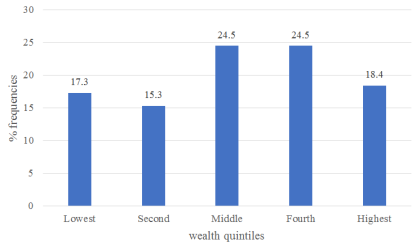
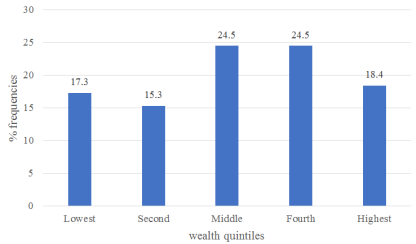
The mean size of the household of the respondents’ household was 5.28 ± 2.26 (Table 1). The wealth index was then converted into a categorical variable by splitting the household into 5 groups (wealth index quintiles) (Figure 1). The majority of the household was in the middle (24.5%) and fourth (24.5%) quintiles while the second quintile had the lowest percentage of households (15.3%).
Table 1. Characteristics of the study respondents.

Variable N

Category

Frequency (N=98)

Percent (%)

Gender

male

61

62.2

female

37

37.8

Marital status

single

18

18.4

married

74

75.5

widowed

5

5.1

separated

1

1.0

Education

informal

7

7.1

primary

42

42.9

secondary

28

28.6

tertiary

16

16.3

university

5

5.1

Employment status

self-employment

36

36.7

formal employment

7

7.1

unemployment

37

37.8

retired

18

18.4

Age (mean ± SD)

53.19 ± 15.0

HH size (mean ± SD)

5.28 ± 2.26

Figure 1. Distribution of respondents’ households by Wealth quintile.
3.2. Dietary Practices of the Study Population
3.2.1. Dietary Diversity
Dietary diversity was determined using the women’s individual dietary diversity score consisting of 9 food groups since there is no combined gender individual dietary diversity score for the adult population. The starchy staples food group was consumed by all the study respondents. The second most consumed food group was milk and milk products (64.2%), followed by legumes, nuts and seeds (58.9%), and other fruits and vegetables (58.9%). The least consumed food group was organ meats consumed by only 2.1% of the respondents (Table 2).
The mean dietary diversity score (DDS) of the respondents was 3.79+1.0 with the highest DDS being 7 and the lowest being only 2 food groups (Table 2). The majority of the respondents (56.8%) were in the medium dietary diversity category (4-5 food groups) followed by 40.0% in the low dietary diversity category of < 4 food groups). Only 3.2% of the respondents had high dietary diversity (Table 3).
Table 2. Distribution of respondents by consumption of food groups.

Food Group

Frequency (N=95)

Percent (%)

1

Starchy staples

95

100

2

Dark Green Leafy Vegetables

19

20.0

3

Other Vitamin A rich Fruits and Vegetables

13

13.7

4

Other Fruits and Vegetables

56

58.9

5

Organ meats

2

2.1

6

Meat and Fish

35

36.8

7

Eggs

23

24.2

8

Legumes, Nuts and Seeds

56

58.9

9

Milk and Milk Products

61

64.2

DDS (Mean±SD)

3.79 ± 1.0 (2 - 7)

*DDS- Dietary Diversity Score
Table 3. Distribution of study respondents by dietary diversity score category.

DDS category

Frequency

Percent (%)

Low dietary diversity (< 4 FGs)

38

40

Medium dietary diversity (4-5 FGs)

54

56.8

High dietary diversity (≥ 6 FGs)

3

3.2

Total

95

100

*FG- Food Group
3.2.2. Nutrients Intakes
The mean intakes of energy (Kcals) and protein (g) were 1121.28±479.42 and 40.73±21.82 respectively. The mean daily intakes (mg/day) for electrolytes calcium, phosphorous, potassium Sodium and magnesium were 317.84±207.84, 858.69±344.10, 1463.84±785.86, 1118.47±707.69 and 216.07±88.94 (Table 4). Furthermore, the mean daily intakes of selected key micronutrients including zinc and iron, were 6.32±3.41 mg/day and 10.81±5.36 mg/day (Table 4).
Table 4. Nutrient intakes of the study respondents.

Nutrient

Units

RDIs

Mean intake (N=94)

Range

Energyab

Kcal

-

1121.28±479.42

364.34 - 2816.06

Proteina

g

≥ 35 (≥ 30)

40.73±21.82

8.09 - 112.65

CHOs

g

1.0-1.2

155.27±60.17

34.63 - 317.06

Fat

g

30-40

32.89±21.15

2.55 - 136.28

Fiber

g

20-30

22.73±10.39

1.94 - 44.49

Calcium

mg

500-800

317.84±207.84

55.88 - 1214.37

Phosphorous

mg

800-1000

858.69±344.10

127.52 - 2003.42

Potassium

mg

2000-2500

1463.84±785.86

187.76 - 3641.1

Sodium

mg

1500-2300

1118.47±707.69

24.08 - 3976.45

Magnesium

mg

200-300

216.07±88.94

49.11 - 452.58

Zincc

mg

10-15 (8-12)

6.32±3.41

0.9 - 18.84

Ironc

mg

≥ 8 (≥ 15)

10.81±5.36

0.97 - 24.79

Notes:
a - recommendation per Kg body weight per day
b - value for those aged > 60 years is in parenthesis
c - values for women is in parenthesis
RDIs - Recommended Daily Intakes for MHD patients
3.2.3. Adherence to Nutrient Recommended Nutrient Intakes
Only 8.5% and 20% of the respondents achieved the recommended daily intake of energy and protein per Kg body weight respectively. While the majority of respondents (91.5%) consumed less than the recommended daily intake of energy, the majority (84%) had exceeded the recommended limits for daily protein intake in g/kg/day (Table 5).
The daily recommended intakes (RDIs) for calcium, phosphorous, potassium sodium, magnesium, zinc and iron were adhered to in 11.7%, 18.1%, 7.4%, 20.2%, 35.1%, 14% and 55% of the respondents, respectively. For respondents who did not adhere, more than 85% of them had their intakes for calcium, potassium and sodium below the RDIs, while 72.6% and 53.2% had their intakes for magnesium and calcium, respectively below the RDIs (Table 5).
Table 5. Adherence to recommendations for energy and protein intakes among respondents.

Variable

Meeting recommendations (N=94)

% above recommendations

% below recommendations

category

n

%

Macronutrients

Energy

yes no

8 86

8.5 91.5

- -

91.5

Protein

yes no

19 75

20.2 79.8

84.0

16.0

Micronutrients

Calcium

yes no

11 83

11.7 88.3

2.4

97.6

Phosphorous

yes no

17 77

18.1 81.9

46.8

53.2

Potassium

yes no

7 87

7.4 92.6

12.6

87.4

Sodium

yes no

19 75

20.2 79.8

12.7

87.3

Magnesium

yes no

33 61

35.1 64.9

27.4

72.6

Zinc

Yes no

14 80

14.3 85.1

2.5

97.5 -

Iron

Yes no

55 38

59.1 40.9

-

40.9 -

3.3. Nutritional Status of the Study Respondents
Table 6. Nutritional status of the study respondents.

Variable

Mean ± SD (N=98)

BMI

21.64±3.72

SGA score

18.82±3.71

The nutritional status of the study respondents was determined using two indices i.e., the Body Mass Index (BMI) and the Subjective Global Assessment (SGA). The mean BMI (Kg/m2) of the respondents was 21.64±3.72 while the mean SGA score was 18.82±3.71 (Table 6).
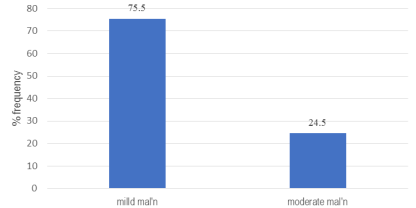
Based on the WHO classification, majority (67.3%) of the respondents had normal BMI status while 17.4% were underweight, 11.2% were overweight and 4.1% obese (Figure 2). Based on the SGA scores, 75.5% of the respondents had mild malnutrition while 24.5% were moderately malnourished (Figure 3).
Figure 2. Distribution of respondents by nutritional (BMI) status.
Figure 3. Distribution of respondents by their SGA score status.
Note: Mild malnutrition = > 7 - <21 SGA scores
Moderate malnutrition = ≥ 21 - < 35 SGA scores
4. Discussion
4.1. Dietary Diversity of the Study Respondents
Almost all of the respondents had between medium and low dietary diversity with the mean score for dietary diversity falling in the lower margin of the medium DDS category. Consistent with current findings where the majority of respondents fell the medium DDS category, in a study conducted to estimate the prevalence of CKD and to evaluate its association with DDS among Moroccan adults, 14.4% of the study subjects had low DDS (≤ 3), 72.5% of the subjects had medium DDS (between 4 and 5) while 13.1% had DDS of six and above (high DDS) . Dietary diversity is acknowledged as a proxy indicator for the nutritional adequacy of diets with those having higher dietary diversity scores being more likely to attain their minimum recommended nutrient intakes . In this study, the least consumed food groups were organ meats, other vitamin A- rich fruits and vegetables, dark green leafy vegetables that are usually rich in vitamin A and eggs. The meat and fish food group ware also not consumed by majority of the respondents. The low consumption of animal proteins could be due to the fact that these foods are often costly which can further strain the financial resources that would probably be already stretched by the cost of medication and in the backdrop of their impaired productivity . Furthermore, dietary recommendations for hemodialysis patients can often contradict the general balanced diet recommendations. Hemodialysis patients often need to restrict certain nutrients like potassium, phosphorus, and sodium: Animal protein sources tend to be rich in bioavailable potassium, a mineral that individuals with compromised kidney function need to manage to avoid hyperkalemia: High intakes of potassium leading to elevated serum levels can exacerbate the deterioration of kidney function . Starchy staples were consumed by all the study respondents while more than half of the respondent consumed the food groups other fruits and vegetables (mainly cabbage), milk and milk products (mainly in the form of milk tea) and legumes, nuts and seeds. Current results reflect those of who also reported that the predominant consumption of starchy food was accompanied by a limited selection of vegetables and minimal consumption of animal protein and fruits.
4.2. Nutrient Intakes of the Study Respondents
The mean intakes for energy were below the RDIs while that of protein was within the recommended range for MHD patients. In a recent cross-sectional study that investigated the Diet and Comorbidities Affecting Hemodialysis Patients at the Renal Unit in Kenyatta National Hospital, Kenya, found that both the energy (14.73±8.46 Kcal/kg/day) and protein (0.43 g/kg/day) intakes were way below the RDIs which corroborate current findings. reported that the majority of their study subjects did not attain the recommended levels of calorie density (95%) and protein (91%) intakes. Their findings agree with current results for energy but not for proteins. This could be due the fact that the assessment was done using a 3-day weighed food record as opposed to the 24-hour recall in our case where respondents might have overestimated their intakes. Save for carbohydrate consumption, current findings for macronutrient intakes fall slightly below those of who assessed the dietary intakes of 48 CKD patients on HD using 3-repeat 24-hour recalls and reported an average energy intake of 1580.5±164 kcal/day; protein 54.0±4.8 gm/day, carbohydrate 204.3±19.0 gm/day and fat 49.0±4.6 gm/day. Haemodialysis patients are expected to consume high energy and protein diet to avoid protein-energy malnutrition (PEM), putting into consideration electrolyte and fluid restrictions
Our findings on sodium intakes contrast those of who reported high sodium intakes above recommendation (2502 mg/day) in majority of their study subjects. Excess sodium intake stimulates the osmoreceptors to create a thirst and encourages increased water intake, leading to increased total body water which in turn results in interdialytic weight gain (IDWG) and necessitates more volume removal during dialysis . Current findings show that the intakes of calcium, potassium and sodium were below the range of daily recommendations while phosphorous intake was within the recommended range of daily intakes. Clinical practice guidelines recommend restricted phosphorous, potassium and sodium intakes to prevent increased serum electrolyte levels which is linked with cardiovascular complications. Higher potassium intakes within the recommended range are consistent with findings for protein intakes since most of the high-protein foods also have high potassium levels. Furthermore, Current findings show that the intake of zinc was insufficient while that of iron met the RDIs. The findings reported by , on the intakes for sodium (904.5 mg/day), calcium (203 mg/day), and zinc (4.92 mg/day) compared relatively well with current results, being below recommendation. Similarly, consistent with current findings potassium intakes (973.6 mg/day) were below recommendations although with lower values than in current findings. It has been reported that dialysis patients have generally lower dietary intakes than the healthy population which decreases even further as the disease progresses, a fact commonly attributed to poor appetite or anorexia secondary to the build-up of uremic toxins
Overall, the results for nutrient intakes show that majority of the respondents are not meeting the minimum recommended intakes for most of the nutrients which can partly be attributed to their poor diversity (mean DDS falling in the low category). Furthermore, the reduced intake of micronutrients is expected to reduce food intake to mitigate the risk of hyperkaelemia and fluid overload. Other studies have reported general inadequacy of the consumption of essential nutrients ijcluding calcium, phosphorous, zinc, vitamins and dietary fibre among hemodialysis patients
4.3. Adherence to Recommended Nutrient Intakes
Current findings reveal that adherence to recommended nutrient intakes for key nutrients including macronutrients (energy and protein), micronutrients (calcium, phosphorous, potassium, sodium and magnesium) as well as the micronutrient except iron was poor in majority of the respondents. Over three quarters of the respondents did not adhere to the recommended intake levels of all of nutrients except for magnesium where 33% adhered and iron where 55% adhered. Furthermore, among those who did not adhere, the majority of them (>two-thirds) had intakes below the minimum recommended levels except for proteins which was consumed in excess by 84% of respondents and phosphorus which was consumed in excess by the majority (53.2%) of the respondents. Findings for protein and phosphorous intakes are mutually corroborative since most high-protein foods also contain high phosphorous levels. A reduced phosphorous intake is recommended as a first-line strategy to control hyperphosphatasemia In a facility-based study conducted in the Canary Islands, Spain reported that a large proportion of HD patients did not comply to the current renal-specific dietary recommendation: 77% and 50% of the respondents ingested less the RDIs for energy and protein respectively. Only iron and zinc were consumed in adequate amounts by more than 50% of patients. In contrast with current findings, phosphorous, calcium, sodium and potassium were consumed in excessive amount. have noted that narrow target ranges in the dietary guidelines with regard to specific nutrients might not be practical or feasible in real-life settings in which there are no purposive or educational programs. Current recommendations for the nutritional management of CKD typically focus on a few individual components of diet such as protein and sodium . As reported in other studies lack of awareness/knowledge may be contributing to non-adherence as patients on dialysis or their support system may not be aware of the recommended energy and protein intake unless they receive nutritional counselling from a health professional .
4.4. Nutritional Status
Current results show that the majority of the respondents (67.3%) had normal nutritional status based on the WHO BMI classification system while underweight prevalence was 17.4%. investigated the nutritional status of CKD undergoing HD using BMI and reported that 64.15% had normal nutritional status while 24.52% were malnourished, furthermore they reported a mean BMI value of 21.03±3.94 Kg/m2- their findings compare well with current BMI results. Additionally, the findings of , who assessed the nutritional status of 100 CKD patients undergoing dialysis in various health facilities in India, compare relatively well with our findings; They reported 13% had a BMI of more than 30, 55% had a BMI in the normal range (18.5 to 24.9) while 17% BMI less than 18.5. As per the current results, 15.3% were overweight/obese, 67.3% had normal BMI and 17.4% were underweight.
Conversely, based on the SGA scoring system, majority three-quarters of the respondents (75.5%) were mildly malnourished and the remaining quarter were moderately malnourished. The results for SGA score corroborate with those of a study conducted in Egypt to assess the nutritional status of patients with chronic renal failure undergoing HD attending HD unit in Damanhur National Medical Institute in which 65.5% of the patients were mildly malnourished, 24.7% were moderately malnourished and 9.8% had normal nutritional status. Furthermore, the current findings for SGA score compare fairly well with those of who also reported malnutrition to be present in 98 (61.2%) of the patients while severe malnutrition was found in only 3 (1.9%) of the patients.
Current results show some discrepancy in diagnostic performance between SGA and BMI systems in identifying malnutrition among the study population. The SGA scoring system identified more malnourished cases (all respondents had mild to moderate malnutrition) than the BMI system where more than two-thirds of respondents had normal malnutrition status. This suggests that the SGA system has a greater sensitivity in identifying malnutrition cases among HD patients against the BMI. A similar scenario has been reported by who found a mean SGA score of 14.61 representing mild to moderate malnutrition and a BMI score of 24.56 which represents normal nutritional status. In a study by [27], the BMI identified malnutrition in 8.7% (n = 117) of the total sample, while the SGA diagnosed malnutrition in 32.4% (n = 437) of patients. The BMI accuracy was unsatisfactory and sensitivity, specificity, and positive predictive value were low, although negative predictive value was high. They concluded that BMI was not accurate for malnutrition diagnosis in a large sample of hospitalized patients, and its use was inappropriate in clinical practice for nutritional assessment . Higer sensitivity of the SGA score system could be because it considers factors like weight changes, dietary intake, gastrointestinal symptoms, and functional capacity, which can be affected by malnutrition even if BMI is within a normal range. Conversely, BMI, may miss cases of malnutrition where individuals have normal weight but are experiencing muscle loss or other nutritional deficiencies. Identifying more malnutrition cases with SGA can prove beneficial in facilitating more timely interventions leading to better patient outcomes. Nutritional status plays a critical role in the long-term survival of HD patients and poor nutritional status is associated with increased morbidity, reduced functional capacity and a greater number and duration of hospital admissions all of which compromise health-related quality of life (QoL) . Maintenance Hemodialysis is usually accompanied by inflammatory and catabolic processes that raise energy demand and expenditure thereby resulting in a negative energy balance that often leads to Protein Energy Wasting (PEW)
4.5. The Relationship Between Adherence and Nutritional Status
Current study reveals that adherence to only two of the recommended dietary practices investigated was significantly associated with the respondents’ nutritional status (SGA scores): adherence to recommendations for milk consumption was significantly associated with the respondents’ BMI scores while the preparation of separate meals from family meals was significantly associated with the patients’ SGA scores. Furthermore, the current study has established significant relationship between intakes of potassium, iron, vitamins B1, B2 and B3 and their BMI scores: However, there was no significant relationships between the patients’ SGA scores and their adherence to the RDIs for specific nutrients. Few studies have undertaken and investigation of the relationship between dietary prescription adherence and nutritional status among the MHD population. found significant associations between low dietary adherence and nutritional biomarkers including dyslipidemia, C-reactive protein levels. They attributed the associations to low intake of fiber and potassium and high intake of cholesterol.
5. Conclusions
The most consumed food groups were starchy staples consumed by all the respondents followed by milk and milk (64.2%), products, legumes, nuts and seeds (58.9%), and other fruits and vegetables (58.9%). The least consumed food group was organ meats consumed by only 2.1% of the respondents. The mean dietary diversity score (DDS) of the respondents was 3.79+1.0 with the highest DDS being 7 and the lowest being only 2 food groups. Majority of the respondents (56.8%) were in the medium dietary diversity category (4-5 food groups) followed by 40.0% in the low dietary diversity category of < 4 food groups). Only 3.2% of the respondents had high dietary diversity. The majority of the respondents consumed less than the daily nutrient recommendations for energy, calcium, phosphorous, potassium sodium, magnesium and zinc. Protein was consumed in excess by the majority of the respondents while the majority of the respondents consumed iron within the recommended levels. Based on the WHO classification, the majority of the respondents had normal BMI status while the rest were underweight, overweight and obese. However, based on the SGA score system, the majority of the respondents had mild malnutrition while the rest were moderately malnourished. These findings provide evidence for the need of emphasis on nutritional counselling among HD patients to improve nutrient intake and nutritional status that would enhance the quality of life and other disease outcomes.
6. Recommendations
The study recommends the strengthening of Individualized counselling with emphasis to specific food groups including meats and dairy as well as consumption of processed products and salt intake to enhance adherence among patients. Furthermore, programs for patients’ follow-up should the instituted in a bid to bridge the gap between counselling and practice among patients.
Abbreviations

BMI

Body Mass Index

HD

Haemodialysis

CKD

Chronic Kidney Disease

RDIs

Recommended Daily Intakes

SGA

Subjective Global Assessment

Acknowledgments
The authors would like to thank Kenyatta university, Food, Nutrition and Dietetics department for their resourcefulness and guidance. In addition, special thanks to Department of Health at Meru Teaching and Referral Hospital during this research. Mr. Felix Ondiek, the data Analyst for support during preparation of the manuscript, to research assistants and family.
Author Contributions
Karoki Phyllis Wanjiku: Conceptualization, Formal analysis, Investigation, Methodology, Writing - original draft
Kamuhu Regina: Supervision, Writing - review & editing
Kuria Elizabeth: Supervision, Writing - review & editing
Funding
This work is sole financed by authors and therefore, this article is not affiliated to any organisation.
Ethics Approval and Consent to Participate
Ethical approval was obtained from Kenyatta University Ethical Review Committee (PKU/2729/11853) Additional approval to collect data was obtained from the Medical Superintendents of the Meru Level 5 Hospital, Nyambene Sub County Hospital St Theresa mission Hospital. Informed consents were obtained from all study participants prior to participation.
Conflicts of Interest
The authors declare no conflicts of interest.
References
[1] V. Mwenda, J. Githuku, G. Gathecha, B. M. Wambugu, Z. G. Roka, and W. O. Ong’or, “Prevalence and factors associated with chronic kidney disease among medical inpatients at the Kenyatta National Hospital, Kenya, 2018: a cross-sectional study,” Pan Afr. Med. J., vol. 33, 2019,
[2] County Government of Meru, “Meru County Acquires Dialysis Machines,” County Government of Meru. Accessed: Jul. 18, 2025. [Online]. Available:
[3] A. Oketch, “Kenya: MES Dialysis Kits Offer Respite as Cases Surge,” The Nation, Nairobi, May 17, 2021. Accessed: Jul. 18, 2025. [Online]. Available:
[4] A. Ruto, “Dialysis now closer to home for kidney failure patients,” The Star. Accessed: Jul. 18, 2025. [Online]. Available:
[5] H.-S. Lim, H.-S. Kim, J. K. Kim, M. Park, and S. J. Choi, “Nutritional Status and Dietary Management According to Hemodialysis Duration,” Clin. Nutr. Res., vol. 8, no. 1, p. 28, 2019,
[6] C. D’Alessandro et al., “‘Dietaly’: practical issues for the nutritional management of CKD patients in Italy,” BMC Nephrol., vol. 17, no. 1, p. 18, Dec. 2016,
[7] D. Luis et al., “Dietary Quality and Adherence to Dietary Recommendations in Patients Undergoing Hemodialysis.,” J Ren Nutr, vol. 26, no. 3, pp. 190-5, 2016,
[8] F. Esra, “Medical Nutrition Therapy for Hemodialysis Patients,” in Hemodialysis, InTech, 2013, pp. 21-42.
[9] M. M. Fawzy, N. E. Morsy, and D. S. E.-D. A. El-Moneem, “Nutritional assessment among patients with chronic renal failure undergoing hemodialysis,” Egypt. Nurs. J., vol. 18, no. 2, pp. 51-57, May 2021,
[10] R. O. Opiyo et al., “Factors associated with adherence to dietary prescription among adult patients with chronic kidney disease on hemodialysis in national referral hospitals in Kenya: a mixed-methods survey,” Ren. Replace. Ther., vol. 5, no. 1, p. 41, Dec. 2019,
[11] P. Bramania, P. Ruggajo, R. Bramania, M. Mahmoud, and F. Furia, “Nutritional Status of Patients on Maintenance Hemodialysis at Muhimbili National Hospital in Dar es Salaam, Tanzania: A Cross-Sectional Study,” J. Nutr. Metab., vol. 2021, pp. 1-7, May 2021,
[12] R. Moustakim, M. Mziwira, M. El Ayachi, and R. Belahsen, “Dietary diversity score and the incidence of chronic kidney disease in an agricultural Moroccan adults population,” Rocz. Państw. Zakładu Hig., vol. 73, no. 3, pp. 293-301, Sep. 2022,
[13] L. Cornelsen et al., “Cross-sectional study of drivers of animal-source food consumption in low-income urban areas of Nairobi, Kenya,” BMC Nutr., vol. 2, no. 1, p. 70, Dec. 2016,
[14] S. Kim and J. Jung, “Nutritional management in patients with chronic kidney disease,” Korean J. Intern. Med., vol. 35, no. 6, pp. 1279-1290, Nov. 2020,
[15] N. A. Gityamwi, K. H. Hart, and B. Engel, “A Cross-Sectional Analysis of Dietary Intake and Nutritional Status of Patients on Haemodialysis Maintenance Therapy in a Country of Sub-Saharan Africa,” Int. J. Nephrol., vol. 2021, pp. 1-12, May 2021,
[16] R. M. Muthoni, J. N. Waudo, and R. W. Kamuhu, “Diet and Comorbidities Affecting Hemodialysis Patients at the Renal Unit in Kenyatta National Hospital, Kenya: A Cross Sectional Analytic Study,” Int. J. Health Sci. Res., vol. 13, no. 7, pp. 110-121, Jul. 2023,
[17] Z. Xie, R. McLean, and M. Marshall, “Dietary Sodium and Other Nutrient Intakes among Patients Undergoing Hemodialysis in New Zealand,” Nutrients, vol. 10, no. 4, p. 502, Apr. 2018,
[18] N. K. Maurya, P. Arya, and N. S. Sengar, “Dietary Intake And Nutritional Status in Hemodialysis Patients,” Int. Res. J. Pharm., vol. 10, no. 4, pp. 102-105, May 2019,
[19] V. M. Saglimbene et al., “Dietary intake in adults on hemodialysis compared with guideline recommendations,” J. Nephrol., vol. 34, no. 6, pp. 1999-2007, Dec. 2021,
[20] H. Beerappa and R. Chandrababu, “Adherence to dietary and fluid restrictions among patients undergoing hemodialysis: An observational study,” Clin. Epidemiol. Glob. Health, vol. 7, no. 1, pp. 127-130, Mar. 2019,
[21] H. Kim, H. Lim, and R. Choue, “A Better Diet Quality is Attributable to Adequate Energy Intake in Hemodialysis Patients,” Clin. Nutr. Res., vol. 4, no. 1, p. 46, 2015,
[22] C. M. Avesani, D. Teta, and J. J. Carrero, “Liberalizing the diet of patients undergoing dialysis: are we ready?,” Nephrol. Dial. Transplant., vol. 34, no. 2, pp. 180-183, Feb. 2019,
[23] N. Kaesler et al., “Low adherence to CKD-specific dietary recommendations associates with impaired kidney function, dyslipidemia, and inflammation,” Eur. J. Clin. Nutr., vol. 75, no. 9, pp. 1389-1397, Sep. 2021,
[24] S. Joshi, S. Singh, and A. Singh, “Evaluation of Nutritional Status of Chronic Kidney Disease Patients Undergoing Hemodialysis,” Med Phoenix, vol. 5, no. 1, pp. 19-25, Sep. 2020,
[25] S. Nagabhushana, M. Ranganatha, G. K. Ranjith Kumar, and Virupakshappa, “Evaluation of nutritional status in chronic kidney disease patients undergoing hemodialysis,” Int J Adv Med, vol. 4, no. 4, p. 907, 2017.
[26] S. Abozead, A. Ahmed, and M. Mahmoud, “Nutritional Status and Malnutrition Prevalence among Maintenance Hemodialysis Patients,” IOSR J Nurs Health Sci IOSR-JNHS, vol. 4, no. 4, pp. 51-58, Dec. 2017.
[27] J. Lima, S. Bernardes, and F. Silva, “Body mass index is not accurate to diagnose malnutrition in hospitalized patients: a crosssectional analysis,” BRASPEN J., vol. 37, no. 4, 2022,
[28] L. Visiedo et al., “The impact of nutritional status on health-related quality of life in hemodialysis patients,” Sci. Rep., vol. 12, no. 1, Feb. 2022,
[29] B. Kistler, D. Benner, M. Burgess, M. Stasios, K. Kalantar-Zadeh, and K. R. Wilund, “To Eat or Not to Eat—International Experiences With Eating During Hemodialysis Treatment,” J. Ren. Nutr., vol. 24, no. 6, pp. 349-352, Nov. 2014,
Cite This Article
  • APA Style

    Wanjiku, K. P., Regina, K., Elizabeth, K. (2025). Dietary Practices and Nutritional Status of Hemodialysis Patients in Meru County. International Journal of Nutrition and Food Sciences, 14(4), 248-259. https://doi.org/10.11648/j.ijnfs.20251404.17

    Copy | Download

    ACS Style

    Wanjiku, K. P.; Regina, K.; Elizabeth, K. Dietary Practices and Nutritional Status of Hemodialysis Patients in Meru County. Int. J. Nutr. Food Sci. 2025, 14(4), 248-259. doi: 10.11648/j.ijnfs.20251404.17

    Copy | Download

    AMA Style

    Wanjiku KP, Regina K, Elizabeth K. Dietary Practices and Nutritional Status of Hemodialysis Patients in Meru County. Int J Nutr Food Sci. 2025;14(4):248-259. doi: 10.11648/j.ijnfs.20251404.17

    Copy | Download

  • @article{10.11648/j.ijnfs.20251404.17,
      author = {Karoki Phyllis Wanjiku and Kamuhu Regina and Kuria Elizabeth},
      title = {Dietary Practices and Nutritional Status of Hemodialysis Patients in Meru County
    },
      journal = {International Journal of Nutrition and Food Sciences},
      volume = {14},
      number = {4},
      pages = {248-259},
      doi = {10.11648/j.ijnfs.20251404.17},
      url = {https://doi.org/10.11648/j.ijnfs.20251404.17},
      eprint = {https://article.sciencepublishinggroup.com/pdf/10.11648.j.ijnfs.20251404.17},
      abstract = {The increasing prevalence of chronic kidney disease (CKD) imposes a huge healthcare burden on developing countries. For patients undergoing hemodialysis (HD), optimal nutritional management is associated with better treatment outcomes and quality of life. However, malnutrition is commonly reported among these patients and calls for investigation of specific aspects of their diet that can be targeted by counseling and other interventions. The study sought to establish the Dietary Practices and Nutrition Status Hemodialysis patients in Meru County. This study investigated a sample size of 98 hemodialysis patients across health facilities in Meru County on their dietary practices and nutritional status. The study adopted a descriptive cross-sectional design. Respondents were randomly selected from three health facilities offering dialysis services within the County. Data was collected using researcher-administered structured questionnaires. Nutritional Status was assessed by both Body Mass Index (BMI) and a modified Subjective Global Assessment (SGA) tool. A single 24-hour recall was used to assess nutrient intake. Weight and height were taken using electronic scales and stadiometers respectively. Data was cleaned in Excel sheets then transferred into the Statistical Package for Social Science (SPSS) version 25 software for analysis employing descriptive statistics. The findings show that majority (56.8%) of the respondents had medium dietary diversity. The mean dietary diversity score (DDS) was 3.79+1.0. The most consumed food group was starchy staples (100% frequency), while the least consumed food group was organ meats consumed (2.1%). The mean intakes of energy and protein were 1121.28±479.42 and 40.73±21.82 respectively. The mean intakes for key micronutrients including calcium, phosphorous, potassium, sodium magnesium, zinc and iron in mg/day were 317.84±207.84, 858.69±344.10, 1463.84±785.86, 1118.47±707.69, 216.07±88.94, 6.32±3.41 and 10.81±5.36. Except for proteins and iron, various nutrients were consumed below the recommendations by majority of respondents. The mean BMI (kg/m2) and SGA score of the respondents were 21.64±3.72 and 18.82±3. 71 respectively. Based on the WHO classification system 67.3%, 17.4% and 15.3% of the respondents were normal weight, underweight and overweight/obese respectively. However, based on the SGA scores 75.5% and 24.5% of the respondents had mild malnutrition and moderate malnutrition respectively. Over a quarter of haemodialysis patients have poor nutrition status. There is need to scale individualized dietary counselling interventions to improve the dietary practices for better nutritional outcomes among the haemodialysis patient population in Meru County.},
     year = {2025}
    }
    

    Copy | Download

  • TY  - JOUR
    T1  - Dietary Practices and Nutritional Status of Hemodialysis Patients in Meru County
    
    AU  - Karoki Phyllis Wanjiku
    AU  - Kamuhu Regina
    AU  - Kuria Elizabeth
    Y1  - 2025/08/13
    PY  - 2025
    N1  - https://doi.org/10.11648/j.ijnfs.20251404.17
    DO  - 10.11648/j.ijnfs.20251404.17
    T2  - International Journal of Nutrition and Food Sciences
    JF  - International Journal of Nutrition and Food Sciences
    JO  - International Journal of Nutrition and Food Sciences
    SP  - 248
    EP  - 259
    PB  - Science Publishing Group
    SN  - 2327-2716
    UR  - https://doi.org/10.11648/j.ijnfs.20251404.17
    AB  - The increasing prevalence of chronic kidney disease (CKD) imposes a huge healthcare burden on developing countries. For patients undergoing hemodialysis (HD), optimal nutritional management is associated with better treatment outcomes and quality of life. However, malnutrition is commonly reported among these patients and calls for investigation of specific aspects of their diet that can be targeted by counseling and other interventions. The study sought to establish the Dietary Practices and Nutrition Status Hemodialysis patients in Meru County. This study investigated a sample size of 98 hemodialysis patients across health facilities in Meru County on their dietary practices and nutritional status. The study adopted a descriptive cross-sectional design. Respondents were randomly selected from three health facilities offering dialysis services within the County. Data was collected using researcher-administered structured questionnaires. Nutritional Status was assessed by both Body Mass Index (BMI) and a modified Subjective Global Assessment (SGA) tool. A single 24-hour recall was used to assess nutrient intake. Weight and height were taken using electronic scales and stadiometers respectively. Data was cleaned in Excel sheets then transferred into the Statistical Package for Social Science (SPSS) version 25 software for analysis employing descriptive statistics. The findings show that majority (56.8%) of the respondents had medium dietary diversity. The mean dietary diversity score (DDS) was 3.79+1.0. The most consumed food group was starchy staples (100% frequency), while the least consumed food group was organ meats consumed (2.1%). The mean intakes of energy and protein were 1121.28±479.42 and 40.73±21.82 respectively. The mean intakes for key micronutrients including calcium, phosphorous, potassium, sodium magnesium, zinc and iron in mg/day were 317.84±207.84, 858.69±344.10, 1463.84±785.86, 1118.47±707.69, 216.07±88.94, 6.32±3.41 and 10.81±5.36. Except for proteins and iron, various nutrients were consumed below the recommendations by majority of respondents. The mean BMI (kg/m2) and SGA score of the respondents were 21.64±3.72 and 18.82±3. 71 respectively. Based on the WHO classification system 67.3%, 17.4% and 15.3% of the respondents were normal weight, underweight and overweight/obese respectively. However, based on the SGA scores 75.5% and 24.5% of the respondents had mild malnutrition and moderate malnutrition respectively. Over a quarter of haemodialysis patients have poor nutrition status. There is need to scale individualized dietary counselling interventions to improve the dietary practices for better nutritional outcomes among the haemodialysis patient population in Meru County.
    VL  - 14
    IS  - 4
    ER  - 

    Copy | Download

Author Information
  • Department of Health Science, Thika Technical Training Institute, Thika, Kenya. School of Health Science, Kenyatta University, Nairobi, Kenya

    Biography: Karoki Phyllis Wanjiku is a Nutritionist and Dietician Trainer at Thika Technical Training Institute. She is a master’s student at Ken-yatta University and a holder in Bachelor’s degree from Kenyatta University (2014).

    Research Fields: Non-communicable disease and nutrition

  • School of Health Science, Kenyatta University, Nairobi, Kenya

    Biography: Kamuhu Regina is a lecturer at Kenyatta University Department of Food Nutrition and Dietetics. She holds a PHD in Foods, Nutrition and Dietetics from Kenyatta University (2016) and a master’s degree from University of Panjab, India.

    Research Fields: HIV dyslipidaemia, Utilization of ground nuts/peanut in treatment of lipid disorders in HIV and diabetes

  • School of Health Science, Kenyatta University, Nairobi, Kenya

    Biography: Kuria Elizabeth is an Associate Professor, Department of Food Nutrition and Dietetics, Kenyatta University. She holds a PHD from Edith Cowan University, Australia and a Master’s degree from Kenyatta University.

    Research Fields: Food and nutrition security, Gender, Education and Socio protection

  • Abstract
  • Keywords
  • Document Sections

    1. 1. Introduction
    2. 2. Methods
    3. 3. Results
    4. 4. Discussion
    5. 5. Conclusions
    6. 6. Recommendations
    Show Full Outline
  • Abbreviations
  • Acknowledgments
  • Author Contributions
  • Funding
  • Ethics Approval and Consent to Participate
  • Conflicts of Interest
  • References
  • Cite This Article
  • Author Information