Research Article | | Peer-Reviewed

Household Food Security and Complementary Feeding Practices Among Children 6-23 Months Old in Lungalunga, Kwale County, Kenya

Received: 5 November 2025     Accepted: 17 November 2025     Published: 9 December 2025
Views:       Downloads:
Abstract

Globally, undernutrition is among the top causes of morbidity and mortality among children 6-23 months old. In Lungalunga, Kwale County, Kenya, similarly to many parts of the county, only 30.4% of children aged 6–23 months receive appropriate complementary feeding (Minimum Acceptable Diet (MAD)); a composite indicator of Minimum Dietary Diversity (MDD) and Minimum Meal Frequency (MMF). Kwale County is a semi-arid land (ASAL) and experiences chronic food insecurity. This study therefore, sought to establish the state of household food security and how it is related to complementary feeding practices among children 6–23 months old in Lungalunga, Kwale County. The study used a cross-sectional analytical research design and to select the study participants, multistage random sampling was used. In-person interviews were conducted at the household to collect information on complementary feeding practices and household food security. For analysis, the study used Statistical Package for Social Sciences (SPSS) version 27. Chi-square test, Fisher’s exact, linear by linear and logistic regression were used to establish the association between the variables. A statistical significance level (p-value) of <0.05, corresponding to a 95% confidence level was used. About one-tenth (8.1%) of the households experienced severe hunger, 34.7% moderate hunger and 57.1% experienced little to no hunger. All (100%) of the children had received soft, semi-solid or solid meals based on a twenty-four recall. Around three-quarters (76.8%) of the children achieved MMF, 24.1% attained MDD, and only 21.6% had MAD. Significant relationships were observed between all the three indicators of complementary feeding practices (MMF, MDD and MAD) and household food security at a p <0.01. Children from households that experienced moderate hunger had 30% higher odds (OR = 1.298, 95% CI = [1.118, 1.753], p =0.011) of attaining MMF than those experiencing severe hunger, those experiencing 'little to no hunger' were 87% more likely (OR = 1.87, 95% CI = [1.173, 2.473], p < 0.01) to achieve MDD than those experiencing severe hunger and those that experienced 'little to no hunger' had 19% higher odds (OR = 1.191, 95% CI = [1.075, 1.488], p = 0.001) of meeting the MAD than those in severe hunger category. Breastfeeding among children, wealth index, caregivers’ occupation and level of education and household food security were significant predictors of complementary feeding. Therefore, addressing household food security in Lungalunga will significantly improve the complementary feeding practices of children 6-23 months old.

Published in International Journal of Nutrition and Food Sciences (Volume 14, Issue 6)
DOI 10.11648/j.ijnfs.20251406.19
Page(s) 456-474
Creative Commons

This is an Open Access article, distributed under the terms of the Creative Commons Attribution 4.0 International License (http://creativecommons.org/licenses/by/4.0/), which permits unrestricted use, distribution and reproduction in any medium or format, provided the original work is properly cited.

Copyright

Copyright © The Author(s), 2025. Published by Science Publishing Group

Keywords

Household Food Security, Under-nutrition, Complementary Feeding, Minimum Meal Frequency, Minimum Dietary Diversity, Minimum Acceptable Diet

1. Introduction
Household food security occurs when a household has physical and financial access to adequate meals that meet each household member’s nutritional requirements . Globally, food insecurity has remained a concern. Food and Agriculture Organization (FAO) demonstrated that 28.9% (2.33 billion) of individuals globally were food insecure in 2023; 10.7% being severely food insecure. In Africa the prevalence of food insecurity was almost double as 58.0% of its people presented with average to dire food insecurity .
The household food security situation in Kenya is said to have deteriorated, especially among the households in the rural areas following a rise in food cost . Kipkorir’s report in 2024 showed that the situation has been worsening since 2015, as the population increased, with average food insecurity rising from 35.7% to 46.6% and dire food insecurity on the rise from 15.0% to 32.9% in 2023 with prospects of continued increase in 2024 .
In Kenya, malnutrition has continued to be a concern. Nationally, stunting is at 18%, wasting at 5%, and underweight at 10%, whereas in Kwale County prevalence of stunting is 23%, wasting at 6%, and underweight at 14% among children below five years . Kwale County recorded a rise in the proportion of underweight and wasted children from the previous Kenya Demographic and Health Survey (KDHS) conducted in 2014, even though there was a general improvement in nutrition among the children below five years age nationally .
When infants attain 6 months of age, their nutrient needs are more than what breast milk can provide. Giving children solid and other types of feeds at this age is key to preventing deficiencies that could cause under nutrition . The adverse consequences of malnutrition are mainly as a result of sub-optimal nutrition during the first one thousand days of their early life: this includes inappropriate breastfeeding and complementary feeding practices. Approximately, 100,000 deaths could be prevented if appropriate complementary practices were to be scaled up to almost universal levels .
Indicators of complementary feeding include: timely initiation of complementary feeds, minimum meal frequency, minimum dietary diversity and minimum acceptable diet . Globally, fewer than 50% of children aged 6-23 months receive MMF, only a ¼ were fed the MDD, and approximately one in six children received MAD . The KDHS (2022) documented that nationwide, 37% of children in the 6-23 months age group received MDD, 71% attained MMF, and 52% of non-breastfed children received a minimum of two milk feeds. Only 31% of children achieved MAD. These findings indicate that many children aged 6-23 months nationally did not receive the required quality of diet . At the national level, micronutrient deficiencies were reported to be very common amidst children below five years because of the inadequate consumption of nutritious diet . Only 30.5% of children aged 6-23 months in Kwale county attained MAD. Among these, 46% met MDD, meaning they received four or more food groups, and 56.7% attained the MMF. The findings also showed that while the mothers possessed knowledge of recommended complementary feeding practices and held positive attitudes towards them, this never translated to actual practice .
Globally, an increase in undernutrition was seen to be related with an increase in food insecurity. According to a research carried out in Mexico, in their fight against hunger, the findings showed that households relied on less expensive foods, limited the portion sizes during meal times, and also skipped some meals . In 2020, a study by the Famine Early Warning Systems Network (FEWS NET) showed that the households in the marginal agricultural areas like Kwale faced food insecurity forcing them to increase their coping strategies to maintain their food consumption score . The strategies included reducing the portion of food that people ate per meal, how many times they eat daily and the types of food taken. These coping strategies directly affect the frequency and diversity of meals among those households.
Studies conducted in Ghana and Bangladesh indicated that there was a relationship between household food security and IYCF practices . Another study conducted in Kenya’s Nairobi informal settlement area showed that infant feeding practices were significantly related to household food security . Other studies done in Kenya showed that the main contributing factor to under nutrition was household food insecurity. Other studies including a study conducted in Isiolo and another in Nairobi informal settlements highlighted a number of determinants of complementary feeding practices. These determinants included; caregiver’s knowledge, age and level of education and child’s sex and age .
Kwale County’s food security situation and malnutrition among children has continued to be inappropriate . Limited studies have examined the relationship between household food security and complementary feeding practices in Kwale. Despite the demonstrated determinants of complementary feeding practices, this study examined household food security and complementary feeding practices in Lunga-Lunga, Kwale County, and the relationship between them.
2. Materials and Methods
2.1. Study Design
A cross-sectional analytical design was used. This design was appropriate because it allows one-time data collection on both household food security and complementary feeding practices .
2.2. Study Area
This study was conducted in Lungalunga Sub-County, Kwale County, which comprises four wards: Mwereni, Vanga, Dzombo, and Pongwe Kikoneni. This sparsely populated area is characterized by poor infrastructure and housing, and is prone to climate change including extremely short rain seasons and delayed rainfall onset. The region is classified as semi-arid within Kwale County . Additionally, the area reports low nutrition status among children .
2.3. Sample Size
Fisher’s formula was applied to calculate the sample size . This formula is used in cross sectional studies as it provides a sufficient sample size to estimated population prevalence with good precision at a specified confidence level . The calculation yielded a sample size of 359 children, using a 95% confidence level, 30.5% prevalence of appropriate complementary feeding (MAD) based on Knowledge, Attitudes, Beliefs and Practices (KABP) Survey Report of Kwale County in 2017 and allowing for 10% none response.
2.4. Sampling Technique
The research employed a multistage sampling technique. In the first stage, Lungalunga Sub-County, was purposively selected because it is prone to prolonged drought seasons . In the second stage, two Wards were selected by simple random sampling using a table of random numbers. In the third stage, two Community Health Units (CHU) were randomly selected from each ward: In the fourth stage, two villages were randomly selected from each CHU. This was followed by proportionate stratified random sampling for households with children aged 6-23 months old with 42-45 households selected per village.
2.5. Validity and Reliability
The study used a validated questionnaire, and the supervisors reviewed it to confirm that the tool accurately assessed the intended variables.
The research employed a test-retest method to verify the reliability of the questionnaire. The tool was tested on the same group of people one week apart. The results for both were compared to determine the correlation coefficient. SPSS was used and a correlation coefficient of .72 was generated, which was within the acceptable level.
2.6. Data Collection Techniques
Information from caregivers was collected through structured in-person interviews in a one-time household visit. Data on the household’s socio-demographic and economic factors, complementary feeding, and household food security were solicited.
2.7. Data Analysis and Presentation
Statistical Package for Social Sciences (SPSS) version 27 software was used. Household food security was analyzed using household hunger scale (HHS). Complementary feeding practices were analyzed based on the main indicators which are: MDD, MMF and MAD. Inferential statistics, Chi-Square test, Linear by linear, Fisher’s test and logistic regression investigated the relationships among the categorical variables . For the statistical significance, a p-value of <0.05 was used and a confidence level of 95% was set . The analyzed data is presented in tables, charts and graphs .
2.8. Ethical Consideration
The authority to conduct the research was obtained from the Kenyatta University Graduate School and the ethical clearance was granted by Kenyatta University Ethical Review Committee (PKU/2380/11517). Permission to conduct the research was sought from the National Commission of Science, Technology, and Innovation (NACOSTI/P/22/15736). Approval to conduct the research in Lunga-Lunga Sub-County of Kwale County was given by the Ministry of Health, Kwale County (KWL/6/5/CEC/39/Vol.1/45).
All those that participated in the research gave informed voluntary consent. They were taken through the objective of the research and how it was to be conducted and were given the freedom to decide. They were assured of no harm and that their data would be handled with absolute confidentiality. Numbers were used on the data collection instrument instead of their names.
3. Results
3.1. Socio-demographic and Economic Characteristics of the Study Population
In this study, data was collected from 348 households and information on 357 children in the same households resulting in a 99.4% response rate. Majority (78%) of the children 6-23 months old were between the ages of 9-23 months. Regarding the caregivers ages, 15.4% were below 20 years of age, 56.4% were between 20-29 years old, 17.6% were between 30-39 years while only 10% were 40 years old and above. Most caregivers (66%) had attained primary school education, 11% had secondary school education, and approximately 12% had attained a tertiary level education; however, 11% reported no formal education.
Findings indicated that most fathers (84%) were engaged in informal employment, while 15% were in formal employment, and only 1% were unemployed. In contrast, over half of the mothers (66%) were unemployed, with 24% being in informal employment and 11% in formal employment. Eighty-eight (88.2%) of the households owned agricultural land. Wealth index was calculated using principle component analysis from the household characteristics. The findings indicated that about 37% of the households were in the lowest wealth quintile whereas only 8% were in the highest wealth quintiles (Table 1).
Table 1. Socio-demographic and economic characteristics of the study population.

Variables (N = 357)

n

%

M (IQR)

Caregivers age

< 20 years

55

15.4

20 - 29 years

201

56.4

30 - 39 years

63

17.6

≥ 40 years

38

10.6

Mean (SD) age of caregivers

27 ± 8

Median age of Caregivers

24 (10)

Caregiver's education level

Primary

236

66.1

Secondary

40

11.2

Tertiary

43

12

No formal education

38

10.6

Caregivers’ marital status

Married

286

80.1

Divorced

43

12.1

Never Married

28

7.8

Mean (SD) age of children (In months)

14 ± 5

Median Age of Children (In Months)

13 (10)

Children's Age group

6 - 8 Months

78

21.8

9 - 23 Months

279

78.2

Children's gender

Female

196

54.9

Male

161

45.1

Households owning agricultural land

315

88.2

Father's Occupation

Informal Employment

234

83.5

Formal Employment

43

15.4

Unemployed

3

1.1

Mother's Occupation

Unemployed

223

65.8

Informal Employment

80

23.6

Formal Employment

36

10.6

Household Wealth Index

Lowest

131

36.7

Second lowest

43

12

Middle

63

17.6

Fourth

91

25.5

M (IQR) = Median and Interquartile Range; n = frequency

3.2. Food Security Status of the Households
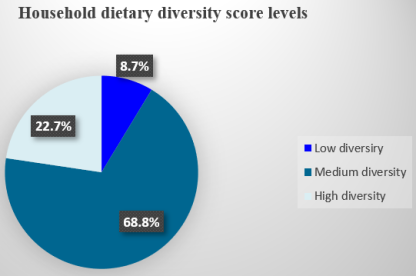
Households’ food security was determined using household dietary diversity score (HDDS) (Figure 1) and household hunger scale (HHS) Figures 2 and 3). The HDDS was assessed based on a 24-hour recall of the food taken by the household and HHS was based on a one-month recall on the food availability condition of the household.
3.2.1. Household Dietary Diversity Score
The food group which was consumed the most was cereal (100%); followed by spices, condiments and beverages (80%); sea foods (71%) and sugar and honey (70%) while the food groups which were consumed less were eggs (5%), roots and tubers (9%), meats, poultry and offal (11%), dairy products (22%), and pulse, legumes and nuts (23%).
The sum of food groups consumed were converted into dietary diversity levels according to a study done in rural Bangladesh in 2022 : low (for households that consumed between 1 – 3 groups); medium (for households that consumed 4 - 6 groups) and high (for households that consumed 7 groups and above). The median score was 5 with an interquartile range of 2. Over two thirds of the households (69%) were in medium diversity, followed by 23% in high diversity and only 9% in low diversity.
Figure 1. Household dietary diversity score levels.
3.2.2. Household Food Security Status by Household Hunger Scale
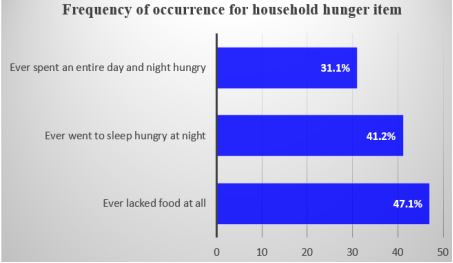
Household hunger scale uses frequency-of-occurrence questions from three frequency categories (“Rarely”, “Sometimes” and “Often”) for over a period of one month. The questions included: if any of the household members ever lacked food at all, went to sleep hungry at night or spent the entire day and night hungry. As shown in Figure 2, the findings indicated that nearly half of the households (47%) ever lacked food at all, while 41% reported going to bed hungry and 31% experienced hunger throughout the entire day and night.
Figure 2. Frequency of occurrence for household hunger item.
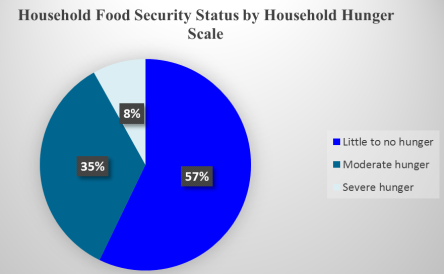
The assessment of household food security status indicated that over half of the households (57%) experienced little hunger, followed by slightly more than a third (35%) who experienced moderate hunger and only 8% faced severe hunger, as indicated in Figure 3.
Figure 3. Household Food Security Status by Household Hunger Scale.
3.3. Complementary Feeding Practices of Children 6 - 23 Months Old
3.3.1. Introduction of Complementary Feeding
All children aged 6-8 months were reported to have taken food in the day before the survey, implying that introduction to complementary feeding was timely for all the children. Thirty-one percent (31%) of the children were reported to have been started complementary feeding before they were six months old.
3.3.2. Minimum Meal Frequency (MMF)
MMF, which represents the percentage of children 6–23 months old that ate food and took the minimum milk feeds for non-breastfed children the least acceptable times during the preceding day before the study, was relatively high. Slightly more than three-quarters (77%) met the minimum meal frequency.
Results indicate that a substantial percentage of children (75%) had been breastfed the day before data collection. Among those who had not been breastfed, 4.5% were between the ages of 6–8 months, while 96% were aged 9–23 months. Of the non-breastfeeding children, only 30.7% had received any milk feeds in the past 24 hours and only 21.6% had met the minimum milk feeding frequency.
Among the children who met the MMF, 72% were breastfeeding and aged 6–8 months, 58% were breastfeeding and were 9 – 23 months old, and 64% were non-breastfeeding and were in the whole group of 6 to 23 months.
3.3.3. Minimum Dietary Diversity (MDD)
The results showed that among the children 6-23 months old, the foods groups with high consumption were grains, roots and tubers (98%), breast milk (74.5%), vitamin A rich food (56%) and flesh foods (54% while the least consumed were eggs (4%).
About 24% of the children met the MDD requirements. This implies that, they consumed at least five food groups during the preceding day, out of the total identified food groups (eight food groups).
3.3.4. Minimum Acceptable Diet (MAD)
MAD indicator combines both MMF and MDD, and it comprises of children who met the MDD the minimum mealtimes, with the added condition that children not being breastfed met a minimum milk feeding frequency.
The minimum acceptable diet was achieved by 22% of 6-23 months old children; among these, 28% were breastfeeding, whereas only 1% of non-breastfed children met this standard as shown in Table 2.
Table 2. Complementary feeding practices.

Variables

n

%

Breastfeeding (At the time of data collection) (N = 357)

Yes

269

75.4

No

88

24.6

Minimum Meal Frequency (MMF)

Breastfed children aged 6-8 Months consuming 2* times (N=78)

56

71.8

Breastfed children aged 9-23 Months consuming 3* times (N = 279)

162

58.1

Non-breastfed children aged 6-23 Months consuming 4* times (N = 88)

56

63.6

Overall Minimum Meal Frequency (MMF) (N=357)

274

76.8

Overall Minimum Dietary Diversity (MDD) (N=357)

86

24.1

Minimum Acceptable Diet (MAD)

Breastfed children aged 6-23 Months (N =269)

76

28.3

Non-breastfed aged children 6 - 23 Months with at least 2 milk feeds (N=88)

1

1.1

Overall MAD (N=357)

77

21.6

* Consuming food and / or milk feeds for non-breastfed

3.4. Association Between Socio-demographic and Economic Factors and Complementary Feeding Practices
3.4.1. Socio-demographic Factors and Complementary Feeding Practices
Table 3. Socio-demographic factors and complementary feeding practices.

Socio-demographic factors (N=357)

Complementary feeding practice

Fisher's Exact value

P-value

n (%)

n (%)

Minimum Meal Frequency (MMF)

Did not attain MMF

Attained MMF

Education Level

Primary school

57 (24.2)

179 (75.8)

23.97

<0.01

Secondary school

12 (30.0)

28 (70.0)

Tertiary

0

43 (100)

No formal education

14 (36.8)

24 (63.2)

Marital status

Married

71 (24.8)

76 (26.6)

2.863

0.233

Divorced

9 (20.9)

2 (4.7)

Not married

3 (10.7)

8 (28.6)

Minimum Dietary Diversity (MDD)

Did not attain MDD

Attained MDD

Education Level

Primary school

201 (85.2)

35 (14.8)

122.246

<0.01

Secondary school

29 (72.5)

11 (27.5)

Tertiary

3 (7.0)

40 (93.0)

No formal education

38 (100)

0

Marital status

Married

210 (73.4)

215 (75.2)

12.22

0.002

Divorced

41 (95.3)

34 (79.1)

Not married

20 (71.4)

25 (89.3)

Minimum Acceptable Diet (MAD)

Did not attain MAD

Attained MAD

Education Level

Primary school

203 (86.0)

33 (14.0)

83.798

<0.01

Secondary school

29 (72.5)

11 (27.5)

Tertiary

10 (23.3)

33 (76.7)

No formal education

38 (100)

0

Marital status

Married

219 (76.6)

67 (23.4)

10.223

0.006

Divorced

41 (95.3)

2 (4.7)

Not married

20 (71.4)

8 (28.6)

Fisher’s exact test of independence was used to establish the associations between socio-demographic factors and complementary feeding practices. Except for minimum meal frequency and marital status, all other associations between socio-demographic factors and complementary feeding practices were statistically significant, all p-values<0.05 (Table 3).
3.4.2. Wealth Index and Complementary Feeding Practices
Fisher’s exact test of independence was done to establish the wealth index’s relationship with complementary feeding indicators (Table 4). A statistically significant relationship was found, all p-values<0.01.
Table 4. Wealth Index and complementary feeding practices.

Wealth Index (N=357)

Complementary feeding practice

Fisher's Exact value

P-value

n (%)

n (%)

Minimum Meal Frequency (MMF)

Did not attain MMF

Attained MMF

Lowest

45 (34.4)

86 (65.6)

27.593

<0.01

Second

14 (32.6)

29 (67.4)

Middle

9 (14.3)

54 (85.7)

Fourth

15 (16.5)

76 (83.5)

Highest

0

29 (100)

Minimum Dietary Diversity (MDD)

Did not attain MDD

Attained MDD

Lowest

131 (100)

0

131.01

<0.01

Second

40 (93.0)

3 (0.7)

Middle

47 (74.6)

16 (25.4)

Fourth

40 (44.0)

51 (56)

Highest

13 (44.8)

16 (55.2)

Minimum Acceptable Diet (MAD)

Did not attain MAD

Attained MAD

Lowest

131 (100)

0

121.023

<0.01

Second

40 (93.0)

3 (7.0)

Middle

52 (82.5)

11 (17.5)

Fourth

44 (48.4)

47 (51.6)

Highest

13 (44.8)

16 (55.2)

3.4.3. Complementary Feeding Practices and Caregivers’ Occupation
Chi-square or Fisher’s exact test of independence was conducted to determine the association between caregivers’ occupation and Complementary feeding practices. There was a statistically significant relationship between caregivers’ occupation and Complementary feeding practice (Table 5).
Table 5. Caregivers Occupation and Complementary feeding practices.

Caregivers employment status

Complementary feeding practice

Chi-sq. / Fisher's Exact value

P-value

n (%)

n (%)

Minimum Dietary Diversity (MDD)

Did not attain MDD

Attained MDD

Unemployed

199 (89.2)

24 (10.8)

102.851

<0.01

Informal Employment

49 (61.2)

31 (38.8)

Formal Employment

5 (13.9)

31 (86.1)

Minimum Meal Frequency (MMF)

Did not attain MMF

Attained MMF

Unemployed

65 (29.1)

158 (70.9)

15.972

<0.01

Informal Employment

15 (18.8)

65 (81.2)

Formal Employment

0

36 (100)

Minimum Acceptable Diet (MAD)

Did not attain MAD

Attained MAD

Unemployed

199 (89.2)

24 (10.8)

73.961

<0.01

Informal Employment

53 (66.3)

27 (33.8)

Formal Employment

10 (27.8)

26 (72.2)

3.5. Household Food Security and Complementary Feeding Practices
3.5.1. Household Food Security Status by Household Hunger Scale and Complementary Feeding Practices
To relate household food security status by household hunger scale and complementary feeding practices, Chi-square or Fisher’s exact test of independence was conducted, (Table 6). The analysis revealed a significant relationship, because all p-values were below 0.01.
Logistic regression also showed that cchildren from households that experienced moderate hunger had 30% higher odds (OR = 1.298, 95% CI = [1.118, 1.753], p =0.011) of attaining MMF than those experiencing severe hunger, those in the 'little to no hunger' food security category were 87% more likely (OR = 1.87, 95% CI = [1.173, 2.473], p < 0.01) to achieve MDD than those with severe hunger and those that experienced 'little to no hunger' had 19% higher odds (OR = 1.191, 95% CI = [1.075, 1.488], p = 0.001) of meeting the MAD than those in severe hunger category. None of the households that experienced severe hunger met MDD or MAD while more households that met the MDD and MAD experienced little to no hunger.
Table 6. Household food security status by household hunger scale and complementary feeding practices.

Household Hunger Scale (N=357)

Complementary feeding practice

Chi-Sq./ Fisher's Exact value

P-value

n (%)

n (%)

Minimum Meal Frequency (MMF)

Did not attain MMF

Attained MMF

Little to no hunger

38 (18.6)

166 (81.4)

13.864

<0.01

Moderate hunger

30 (24.2)

94 (75.8)

Severe hunger

15 (51.7)

(48.3)

Minimum Dietary Diversity (MDD)

Did not attain MDD

Attained MDD

Little to no hunger

128 (62.7)

76 (37.3)

51.135

<0.01

Moderate hunger

114 (91.9)

10 (8.1)

Severe hunger

20 (100)

0

Minimum Acceptable Diet (MAD)

Did not attain MAD

Attained MAD

Little to no hunger

137 (67.2)

67 (32.8)

40.49

<0.01

Moderate hunger

114 (91.9)

10 (8.1)

Severe hunger

29 (100)

0

3.5.2. Household Dietary Diversity Score and Complementary Feeding Practices
Chi-square or Fisher’s exact test of independence was conducted to determine the relationship between household food accessibility by HDDS and complementary feeding practices (Table 7). A Statistically significant relationship was found with a p-value < 0.01 for MDD and MAD and p-value of 0.013 for MMF. None of the households that had the lower HDDS met MMF, MDD or MAD while more households that met the MDD and MAD had a higher household dietary diversity score.
Table 7. Household dietary diversity score and complementary feeding practices.

Household Dietary Diversity

Complementary feeding practices

Fisher's Exact value

P-value

n (%)

n (%)

Minimum Meal Frequency (MMF)

Did not attain MMF

Attained MMF

Low diversity

31 (100)

0

8.581

0.013

Medium diversity

205 (83.7)

40 (16.3)

High diversity

65 (80.2)

16 (19.8)

Minimum Dietary Diversity (MDD)

Did not attain MDD

Attained MDD

Low diversity

31 (100)

0

131.548

<0.01

Medium diversity

219 (89.4)

26 (10.6)

High diversity

21 (25.9)

60 (74.1)

Minimum Acceptable Diet (MAD)

Did not attain MAD

Attained MAD

Low diversity

31 (100)

0

95.969

<0.01

Medium diversity

219 (89.4)

26 (10.6)

High diversity

30 (37.0)

51 (63.0)

3.6. Predictors of Complementary Feeding Practices
Multiple logistic regression was performed to assess the predictors of complementary feeding practices, from those variables that had associations from Univariate analysis. The model contained three independent variables (Wealth index, Food security, breastfeeding and Caregiver’s occupation) that were statistically significantly related to the complementary feeding practices in univariate analysis. After controlling for the effects of caregiver’s occupation, the full model containing all predictors was statistically significant, χ2 (1, n=357) = 25.270, p-value=0.003 for MDD; χ2 (1, n=357) = 28.35, p-value<0.01 for MMF and χ2 (1, n=357) = 31.23, p-value<0.01 for MAD, indicating that the model could distinguish between 6-23 months old children that attained MDD, MMF and MAD and those who did not.
From the Multiple logistic regression analysis examining predictors of MMF, MDD and MAD in Tables 8, 9 and 10, wealth index, breastfeeding status of the child and food security status were established to be statistically significant.
Table 8. Predictors of Minimum Meal Frequency.

Variables

AOR

95% CI

P-value

Lower

Upper

Minimum Meal Frequency

Wealth Index

Lowest

1.541

0.685

3.470

0.296

Second

0.231

0.208

0.352

0.012

Middle

0.759

0.298

0.913

0.031

Fourth

0.890

0.659

1.014

0.115

Highest

REF

Breastfeeding status of the child

Yes

2.443

1.437

4.152

0.001

No

REF

Food Security

Little to no hunger

0.627

0.331

1.188

0.152

Moderate hunger

1.298

1.118

1.753

0.011

Severe hunger

REF

Caregivers' occupation

Informal Employment

3.039

0.862

2.711

0.084

Formal Employment

4.211

0.775

4.671

0.353

Unemployed

REF

REF = Reference point; * means significant 5% level

Table 9. Predictors of Minimum Dietary Diversity.

Variables

AOR

95% CI

P-value

Lower

Upper

Minimum Dietary Diversity

Wealth Index

Lowest

0.021

0.015

1.034

0.995

Second

0.122

0.025

0.594

0.009

Middle

0.262

0.077

0.894

0.032

Fourth

0.608

0.194

1.906

0.393

Highest

REF

Breastfeeding status of the child

Yes

3.072

1.510

6.246

0.002

No

REF

Food Security

Little to no hunger

1.87

1.173

2.473

<0.01

Moderate hunger

0.015

0.011

1.016

0.998

Severe hunger

REF

Caregivers' occupation

Informal Employment

0.890

0.304

2.606

0.831

Formal Employment

1.070

0.348

3.296

0.906

Unemployed

REF

REF = Reference point; * means significant 5% level

Table 10. Predictors of Minimum Acceptable Diet.

Variables

AOR

95% CI

P-value

Lower

Upper

Minimum Acceptable Diet

Wealth Index

Lowest

0.011

0.010

1.012

0.995

Second

0.121

0.025

0.575

0.008

Middle

0.260

0.178

0.869

0.029

Fourth

0.490

0.159

1.514

0.215

Highest

REF

Breastfeeding status of the child

Yes

3.459

3.211

4.421

<0.01

No

REF

Food Security

Little to no hunger

1.191

1.075

1.488

0.001

Moderate hunger

0.556

0.411

1.045

0.998

Severe hunger

REF

Caregivers' occupation

Informal Employment

1.124

0.386

3.275

0.830

Formal Employment

1.196

0.392

3.647

0.753

Unemployed

REF

REF = Reference point; * means significant 5% level

4. Discussion
This study was conducted to determine the food security status of the households, complementary feeding practices among children in those households and the relationship between the two variables in Lungslunga, Kwale County.
More than half of the caregivers were in the age bracket of 20-29 years. The caregivers' and children's median ages were 24 years and 14 months respectively. Most caregivers had only completed primary school education, and many did not have formal education. Additionally, many of the mothers were not employed and fully dependent on their spouses. Above half of the spouses had informal employment. The results in this research on the respondents’ characteristics were similar to those of researches done in Nairobi slams, Kwale and Marsabit .
Majority of households had ownership of agricultural land. These results were in agreement with those from other rural areas including a study done in Kitui County in 2017 . Ownership of agricultural land did not translate to household being food secure. Additionally, the observations of this research revealed that caregiver’s education level attained and occupation of either of the mother or the spouse were significantly related to complementary feeding practices that would consequently affect the children’s nutrition status. This finding agrees with those of a study done in Kwale County where maternal education level and wealth index were associated with meeting MDD in Kinango and Matuga Sub-Counties .
According to this study, households with mothers in formal employment had a higher chance of their children attaining an acceptable diet. This agreed with the case study done in Matuga Sub-County in Kwale County where after the mothers were empowered economically they improved in their household food security . Most of the households were poor with the majority within in the lowest, second and middle wealth quintiles. These results were different from another research done in Ethiopia which indicated that most households were within the fourth and highest quintiles .
Wealthiest households demonstrated a greater likelihood of children 6-23 months old getting appropriate complementary feeds. These observations were in consensus with a research done in Ethiopia where socioeconomic status of households was significantly related to the children’s complementary feeding practices .
The findings of this study affirmed the need for improving household economic status by better acquisition of education which will enhance maternal employment. Improved social economic status would enhance food access leading to optimal complementary feeding practices among the children in those households.
4.1. Complementary Feeding Practices
4.1.1. Introduction of Complementary Feeding
For optimal nutrition, a child needs to be initiated to complementary food upon attaining six months old. This study’s findings showed that most of the children 6-8 months old were initiated to complementary feeding at the appropriate age, just a few being initiated earlier than the recommended age. These findings concur with those of a study conducted in a Nairobi informal settlement .
The findings of this study however, were not in agreement with those of the knowledge, attitude, beliefs and practice (KABP) survey conducted in 2017 in Kwale where only around three quarters of children 6-8 months old in the study had received complementary food in the past 24 hours prior to the survey. The difference could be due to the time lapse between the two studies with changes in some of the complementary feeding practices. Similar findings are those of a study done in Marsabit where only around a half of the children in that age bracket had consumed complementary foods the past 24 hours . This difference could be attributed to the fact that Marsabit is an arid area.,
4.1.2. Minimum Dietary Diversity
A diverse range of micronutrients have a vital role in the healthy growth and development of children. This indicator therefore measures the adequacy of the micronutrient density in the foods consumed by the child. When a child meets the MDD, consuming at least 5 out of the 8 recommended food groups, it indicates that they have taken food at least from an animal source and a fruit or a vegetable apart from the staples.
The findings of this research indicated that the most commonly consumed foods among children 6-23 months old were grains, roots and tubers. Very few children were reported have had eggs in their meals. Only a small proportion of children met the MDD. These results concur with those of other studies done in Tanzania and Ethiopia and even in Kenya where grains were the most consumed foods. The low percentage of children who met MDD was also in agreement with the 2022 KDHS report and a review for the Sub-Saharan Africa and many other studies in Kenya . This study’s results on the MDD were lower than those the 2017 KABP survey in Kwale, although then, the mark of attaining MDD was consuming at least 4 of the 7 identified food groups the preceding day. This showed a deterioration in the diet variety among children in the complementary feeding age group in Kwale County . The MDD rate was higher than that reported by Chepkirui in 2023 in which nearly one in every ten 6-23 month old children met the MDD in Kwale County .
According to the findings of this study, low MDD was the highest contributor to the low MAD prevalence since MMF was well performing. Inadequate diet variety compromises the micronutrient intake among the children 6-23 months which contributes to the persistent low nutritional status of the under-fives in Kwale County.
4.1.3. Minimum Meal Frequency
Meeting energy requirement is essential for an optimal child’s growth. Due to their small gastric capacity, children can only accommodate little food at a time, to meet their high nutrient and energy needs. Children aged 6-23 months therefore require to eat food besides breast-milk or formula frequently per day.
This study found that nearly 8 in every 10 children met the MMF. These results are in agreement with those of a study done in Ethiopia where MMF was the well performing indicator of complementary feeding with almost three quarters of the children that participated in the study attaining it . This research’s findings were way higher than those of 2017 during the MIYCN knowledge, attitude, beliefs and practice (KABP) survey in Kwale County . This showed a significant improvement in the MMF among the 6-23 months children. The findings of this study were similar to those from other KDHS 2022 where MMF was found to perform well among the other indicators .
In contrast, this study’s findings were different from those of another research conducted in Marsabit in 2021 where less than a quarter of the children achieved MMF . Despite the environment differences between Marsabit (an arid zone) and Kwale (a semi-arid zone), other observations of this studies were similar where they indicated that breastfeeding children had higher chances of meeting MMF. The findings of this research further indicated that HDDS and food security in a household were significant predictors of MMF. This was in agreement with several other studies.
4.1.4. Minimum Acceptable Diet
For a child 6 to 23 months old to have adequate diet for their optimal growth and development, they must have adequate nutrient density and energy needs. MAD is a composite indicator of MDD and MMF.
The findings of this research indicated that only one in every 5 children 6-23 months old achieved MAD. This was a low percentage and this was largely due to the small proportion of children that attained MDD. This finding is in agreement with the findings of several studies . However, this finding is in contrast to another study’s finding done in Marsabit that indicated MMF contributed more to the MAD since it was the worst performing complementary feeding indicator . The inappropriate complementary feeding practices indicated by the low MAD prevalence contributed to the sub optimal nutrition among this age group in Kwale.
The findings of this research on the rate of MAD was lower than that of the KABP survey in 2017 . In this study it was found that the food security status in a household was a significant predictor of MAD. This result agreed with those of other studies including one done in rural Bangladesh .
4.2. Relationship Between Household Food Security and Complementary Feeding Practices
In terms of HDDS which measured food access, this research indicated that only slightly more than a quarter of the households had a highly diverse diet. This showed that the accessibility dimension of food security among households in Lunga-Lunga was deficient. These findings agree with those of Kipkorir which showed that food accessibility had a higher contribution to the food security in Kenya. None of the children from households that had a lower HDDS met MDD and MAD but the ones from households that had a higher HDDS had a high likelihood of having appropriate complementary feeding practices. No households in the fourth and highest wealth quintiles had a lower HDDS because of the higher purchasing power. This showed that households with higher HDDS had higher access to food which is a determinant for appropriate complementary practices and eventually having improved nutrition status. The results are comparable to the ones from another study done in Bangladesh and agreed with another one done by Swindale and Bilinksy in 2006 which suggested that a higher dietary diversity brings about appropriate diet in households.
Almost half of the households were food insecure as they had either moderate or severe hunger according to household hunger scale. These results agreed with a study that was done to assess the food security situation across Kenya in 2022 and 2024. These studies found out that a half of the population that had been surveyed were facing food insecurity . Majority of those that experienced little to no hunger had a much higher dietary diversity score showing that they had more access to food hence more appropriate diet. These research findings were as well similar to those of another study where only 19.5% of the households in Nairobi urban informal settlements were food secure. It further indicated that infants from households facing food insecurity had a significantly less likelihood of attaining appropriate feeding practices than the ones from food secure households .
The results of this study indicated that there was a significant relationship between food security status and complementary feeding practices. These results agreed with a study done in Ethiopia in 2022 where key among the factors significantly related to complementary feeding practices was household food security status. A study done in rural Zambia which studied association between household food security and complementary feeding also found out that children in households experiencing food insecurity had a less likelihood of attaining appropriate complementary feeding practices even after confounding factors were controlled for .
As a conclusion, this study’s findings affirmed the need to have adequate household food security so as to experience appropriate complementary feeding practices among the children in this age group for optimal nutrition.
4.3. Predictors of Complementary Feeding Practices
This study also investigated the predictors of complementary feeding using multiple logistic regression with the variables that showed a relationship using the univariate analysis. Household food security, wealth index, caregivers’ occupation and breastfeeding were the significant predictors of complementary feeding practices. These results were in agreement with several studies including one that was done in Indonesia and one done in Kitui, Kenya in 2014 where households’ income was a predictor of complementary feeding. Many other studies including that done in Nairobi’s Urban informal settlements showed household food security as a determinant of complementary feeding .
5. Conclusions
This study showed that household food security has continued to be a major concern in Lungalunga, Kwale County, Kenya, with most of the households facing different levels of food insecurity. Complementary feeding practices among children aged 6-23 months were also inappropriate especially in the aspects of MDD and MAD although MMF was relatively better. The findings also showed a significant relationship between household food security and complementary feeding practices indicators emphasizing the association between household food security and nutrition outcomes. Further, wealth index indicated that majority of the households belonged to the lower socioeconomic categories, and this was linked to inappropriate complementary feeding practices. It was also identified that apart from household food security; wealth status, child’s breastfeeding status, and caregivers’ occupation and level of education were key predictors of complementary feeding practices.
These findings therefore imply that scaling up complementary feeding practices in Lungalunga, Kwale County needs more than just nutrition education. Strategies to improve it must target both food security and sociodemographic and economic factors that hinder the caregivers from giving appropriate diets to their children. Multisectoral interventions that work to improve household food security by enhancing household socioeconomic status through income-generating initiatives, improving agricultural outcomes and general women empowerment would have a direct impact on complementary feeding practices of children 6-23 months old. Additionally, emphasis on continued breastfeeding to two years and beyond and supporting maternal education will improve appropriate complementary practices.
In conclusion, addressing childhood undernutrition through appropriate feeding practices in areas facing food insecurity like Lungalunga in Kwale County, Kenya requires integrated strategies that have both nutrition specific and nutrition sensitive approaches. Improving food security and caregivers’ socioeconomic characteristics are key in ensuring optimal complementary feeding practices and ultimately good nutrition and health outcomes.
Strengths of the study
One of the major strengths of this study was the triangulation of household food security status by the use of two validated tools to measure two dimensions of food security. It used household dietary diversity scale (HDDS), which measured the ability of a household to access a variety of foods. It also used household hunger score (HHS), which looked into the experience of hunger or food insufficiency in the households, resulting in more valid and reliable findings.
Limitations of the study
This study used a cross sectional design hence it only gave a reflection of the household food security and complementary feeding practices at a point in time. Seasonal variations in food security of the households and its effect on complementary feeding practices were not captured in this study.
Abbreviations

CHU

Community Health Unit

DD

Dietary Diversity

FAO

Food and Agriculture Organization

HDDS

Household Dietary Diversity Scale

HHS

Household Hunger Scale

IYCF

Infant Young Child Feeding

KABP

Knowledge, Attitudes, Beliefs and Practices

KDHS

Kenya Demographic Health Survey

MAD

Minimum Acceptable Diet

MDD

Minimum Dietary Diversity

MIYCF

Maternal Infant and Young Child Feeding

MMF

Minimum Meal Frequency

MOH

Ministry of Health

WHO

World Health Organization

Acknowledgments
I am grateful to Kwale County Government Ministry of health for the support through the research process, especially the Lungalunga Sub-County Community Health Promoters. My heartfelt appreciation also goes to my research assistants for their diligence during the data collection process.
Author Contributions
Naomi Shume: Conceptualization, Data curation, Formal Analysis, Funding acquisition, Investigation, Methodology, Project administration, Resources, Software, Validation, Visualization, Writing – original draft, Writing – review & editing
Sophie Ochola: Conceptualization, Supervision, Writing – review & editing
Eunice Njogu: Supervision, Writing – review & editing
Funding
This work was not supported by any external funding.
Data Availability Statement
The data supporting the outcome of this research work has been reported in this manuscript.
Conflicts of Interest
The authors declare no conflicts of interest.
References
[1] Hamad HJ, Khashroum A. Household food insecurity (HFIS): Definitions, measurements, socio-demographic and economic aspects. J Nat Sci Res. 2016; 6(2): 63-75-75.
[2] Napoli M, Muro PPD, Mazziotta PM. Towards a Food Insecurity Multidimensional Index (FIMI). 2011; 1-72.
[3] Shaw DJ, Shaw DJ. World Food Summit, 1996. World Food Secur. 2007; 347-60.
[4] FAO. The State of Food Security and Nutrition in the World 2024. FAO; IFAD; UNICEF; WFP; WHO; 2024 [cited 2024 Dec 28]. Available from:
[5] Korir L, Rizov M, Ruto E. Food security in Kenya: Insights from a household food demand model. Econ Model. 2020; 92: 99-108. Available from:
[6] Kipkorir P, Wakhungu H, Jecinta Ali, Mulango E, Nyakundi GN, Kiplagat I, et al. Food and Nutrition Security in Kenya: Embedding Nutrition Element within the Four Pillars of Food Security in the Counties Agriculture Sector. 2024 [cited 2024 Dec 28]; Available from:
[7] National Bureau of Statistics Nairobi K. Kenya Demographic and Health Survey 2022 Key Indicators Report. 2023. Available from:
[8] National Bureau of Statistics-Kenya and ICF International. Kenya 2014 Demographic and Health Survey Key Findings. 2015; 6: 24.
[9] Parada CMGDL, Carvalhaes MADBL, Jamas MT. Complementary feeding practices to children during their first year of life. Rev Lat Am Enfermagem. 2007 Apr [cited 2024 Nov 20]; 15(2): 282-9. Available from:
[10] Almasri Y, Balarajan Y, Blankenship J, Chimanya K, Clark D, Gnilo ME, et al. Improving Young Children ’ s Diets During the Complementary Feeding Period.
[11] Audrey J, Ardythe L. Developmental Readiness of Normal Full Term Infants to Progress from Exclusive Breastfeeding to the Introduction of Complementary Foods Reviews of the Relevant Literature Concerning. 2001.
[12] Shrimpton R, Victora CG, Onis MD, Lima C, Blo M. Worldwide Timing of Growth Faltering: Implications for. 2001; 107(5): 1-7.
[13] Scaling Up Nutrition. Nourishing People and Planet Together: Scaling Up Nutrition (SUN) Movement Progress Report 2019. 2019.
[14] SUN Movement. The Scaling Up Nutrition (SUN) Movement Annual Progress Report. Annu Prog Rep 2018. 2018;
[15] WHO and UNICEF. Indicators for assessing infants and young child feeding practices. 2021.
[16] White JM, Bégin F, Kumapley R, Murray C, Krasevec J. Complementary feeding practices: Current global and regional estimates. Matern Child Nutr. 2017; 13(December 2016): 1-12.
[17] Ochola S. Maternal infant and young child nutrition (MIYCN) knowledge, attitudes, beliefs and practices (KABP) survey report Kwale County. 2017.
[18] Cordero-Ahiman OV, Santellano-Estrada E, Garrido A. Food access and coping strategies adopted by households to fight hunger among indigenous communities of Sierra Tarahumara in Mexico. Sustain Switz. 2018; 10(2): 1-14.
[19] FEWS NET. Kenya Food Security Outlook Update December 2020: Mixed short rains likely to negatively impact crop production and range resources regeneration. 2020.
[20] Saha KK, Frongillo EA, Alam DS, Arifeen SE, Persson LÅ, Rasmussen KM. Household food security is associated with infant feeding practices in rural Bangladesh. J Nutr. 2008; 138(7): 1383-90.
[21] Agbadi P, Urke HB, Mittelmark MB. Household food security and adequacy of child diet in the food insecure region north in Ghana. PLoS ONE. 2017; 12(5): 1-16.
[22] MacHaria TN, Ochola S, Mutua MK, Kimani-Murage EW. Association between household food security and infant feeding practices in urban informal settlements in Nairobi, Kenya. J Dev Orig Health Dis. 2018 Feb 1; 9(1): 20-9.
[23] Government of Kenya. The 2017 Long Rains Season Aassessment Report: Kenya Food Security Steering Group (KFSSG). Report. 2017; (July): 1-11.
[24] KFSSG (Kenya Food Security Steering Group). The 2019 long Rains Mid-Season Food and Nutrition Security Review Report. 2019; (May): 1-21.
[25] KFSSG. Government of Kenya. 2019; (September): 1-67.
[26] Amunga DA, Daniels L, Ochola S. Determinants of Complementary Feeding Practices and Nutritional Status of Children 6 - 23 Months in Pastoralist Communities of Isiolo, Kenya. Curr Res Nutr Food Sci J [Internet]. 2022 Apr 29 [cited 2025 Oct 13]; 10(1): 267-75. Available from:
[27] Korir JR. Determinants of complementary feeding practices and nutritional status of children 6-23 months old in Korogocho slum, Nairobi County, Kenya. 2013; (July): 1-129.
[28] Ndemwa M, Wanyua S, Kaneko S, Karama M, Anselimo M. Nutritional status and association of demographic characteristics with malnutrition among children less than 24 months in Kwale County, Kenya. 2017; Available from:
[29] Spector PE. Do Not Cross Me: Optimizing the Use of Cross-Sectional Designs. J Bus Psychol. 2019; 34(2): 125-37.
[30] County Government of Kwale F. County Government of Kwale. 2013.
[31] Fisher LD. Self-designing clinical trials. 1998; 1562(October 1997): 1551-62.
[32] Pourhoseingholi MA, Vahedi M, Rahimzadeh M. Sample size calculation in medical studies. Gastroenterol Hepatol Bed Bench. 2013; 6(1): 14-7.
[33] Gliem JA, Gliem RR. Calculating, Interpreting, and Reporting Cronbach’ s Alpha Reliability Coefficient for Likert-Type Scales. 2003; (1992): 82-8.
[34] Arifin WN. Calculating the Cronbach ’ s alpha coefficients for measurement scales with “ not applicable ” option. 2018; (October).
[35] Guetterman TC. Basics of statistics for primary care research. 2019; 11-7.
[36] Leo GD, Sardanelli F. Statistical significance: p value, 0. 05 threshold, and applications to radiomics — reasons for a conservative approach. 2020;
[37] Canter LW, Canter LW. Data Analysis and Presentation. River Water Qual Monit. 2018; 83-96.
[38] Ali M, Raihan MJ, Siddiqua TJ, Haque MA, Farzana FD, Ahmed SMT, et al. Factors associated with low and medium household dietary diversity compared with high dietary diversity among marginalised households in rural Bangladesh: Findings from a Suchana baseline survey. BMJ Open. 2022 Nov [cited 2024 Dec 29]; 12(11): e062143. Available from:
[39] Mutuku JN. Complementary feeding and nutritional status among children 6-23 months old in Marsabit County, Kenya. 2021;
[40] Mbithe David-Kigaru D, Milelu MM, Mbithe Kigaru DD, Kuria EN. Demographic and socio-economic determinants of availability and access dimensions of household food security in Kitui County, Kenya [Internet]. Vol. 2. 2017 p. 93-101. Available from:
[41] Chepkirui F, Osero J, Nyandieka L. Maternal Factors Associated with Dietary Diversity Scores of Children aged 6-23 Months in Kwale County, Kenya. East Afr Health Res J. 2023 Nov 30 [cited 2025 Mar 31]; 7(2). Available from:
[42] Mwangi F, Omondi E, Technical officer AYSRH, Technical officer community health services, Technical Advisor RMNCAH, Program Manager RMNCAH AMREF Health Africa, et al. Enhancing Food Security and Nutrition through Maternal, Infant, And Young Child Nutrition Support Groups: A Case of Kwale County. In: sustainable food systems, diet, health inequalities and policy [internet]. kenya nutritionists and dieticians institute; 2023 [cited 2025 Mar 31]. Available from:
[43] Ahmed JA, Sadeta KK, Lembo KH. Complementary Feeding Practices and Household Food Insecurity Status of Children Aged 6-23 Months in Shashemene City West Arsi Zone, Oromia, Ethiopia. Nurs Res Pract. 2022; 2022.
[44] WHO, UNICEF, USAID. Consultation report on updating IYCF indicators. 2019.
[45] Khamis AG, Mwanri AW, Ntwenya JE, Kreppel K. The influence of dietary diversity on the nutritional status of children between 6 and 23 months of age in Tanzania. BMC Pediatr. 2019 Dec 28; 19(1).
[46] Molla W, Adem DA, Tilahun R, Shumye S, Kabthymer RH, Kebede D, et al. Dietary diversity and associated factors among children (6-23 months) in Gedeo zone, Ethiopia: cross - sectional study. Ital J Pediatr. 2021 Dec 1; 47(1).
[47] Aboagye RG, Seidu AA, Ahinkorah BO, Arthur-Holmes F, Cadri A, Dadzie LK, et al. Dietary diversity and undernutrition in children aged 6-23 months in sub-saharan africa. Nutrients. 2021 Oct 1; 13(10).
[48] Bowley NA, Pentz-Kluyts MA, Bourne LT, Marino LV, Bowley N. † Private Nutrition Communications Consultancy, Cape Town, ‡ Senior Specialist Scientist, Environment and Health Research Unit, Medical Research Council, Cape Town, and § Manager of Dietetic Services, Red Cross Children’s Hospital Cape Town, Cape Town. Vol. 3, South Africa Maternal and Child Nutrition. 2007 p. 281-91.
[49] Wagris M, Seid A, Kahssay M, Ahmed O. Minimum Meal Frequency Practice and Its Associated Factors among Children Aged 6-23 Months in Amibara District, North East Ethiopia. J Environ Public Health. 2019; 2019.
[50] Birie B, Kassa A, Kebede E, Terefe B. Minimum acceptable diet practice and its associated factors among children aged 6-23 months in rural communities of Goncha district, north West Ethiopia. BMC Nutr. 2021 Dec 1; 7(1).
[51] Swindale A, Bilinksy P. Household Dietary Diversity Score (HDDS) for Measurement of Household Food Access: Indicator Guide (Version 2). 2006;
[52] Mutea E, Hossain MS, Ahmed A, Ifejika Speranza C. Shocks, socio-economic status, and food security across Kenya: policy implications for achieving the Zero Hunger goal. Environ Res Lett. 2022 Sept 1; 17(9).
[53] Bwalya R, Chama-Chiliba CM, Malinga S, Chirwa T. Association between household food security and infant feeding practices among women with children aged 6-23 months in rural Zambia. Chouhan P, editor. PLOS ONE. 2023 Oct 2 [cited 2025 Aug 8]; 18(10): e0292052. Available from:
[54] Kimiywe J, Chege P. Complementary feeding practices and nutritional status of children 6-23 months in Kitui County, Kenya. J Appl Biosci. 2015 Feb 26; 85(1): 7881.
[55] Nurokhmah S, Middleton L, Hendarto A. Prevalence and Predictors of Complementary Feeding Practices Among Children Aged 6-23 Months in Indonesia. J Prev Med Pub Health. 2022 Nov 30 [cited 2025 Oct 17]; 55(6): 549-58. Available from:
Cite This Article
  • APA Style

    Shume, N., Ochola, S., Njogu, E. (2025). Household Food Security and Complementary Feeding Practices Among Children 6-23 Months Old in Lungalunga, Kwale County, Kenya. International Journal of Nutrition and Food Sciences, 14(6), 456-474. https://doi.org/10.11648/j.ijnfs.20251406.19

    Copy | Download

    ACS Style

    Shume, N.; Ochola, S.; Njogu, E. Household Food Security and Complementary Feeding Practices Among Children 6-23 Months Old in Lungalunga, Kwale County, Kenya. Int. J. Nutr. Food Sci. 2025, 14(6), 456-474. doi: 10.11648/j.ijnfs.20251406.19

    Copy | Download

    AMA Style

    Shume N, Ochola S, Njogu E. Household Food Security and Complementary Feeding Practices Among Children 6-23 Months Old in Lungalunga, Kwale County, Kenya. Int J Nutr Food Sci. 2025;14(6):456-474. doi: 10.11648/j.ijnfs.20251406.19

    Copy | Download

  • @article{10.11648/j.ijnfs.20251406.19,
      author = {Naomi Shume and Sophie Ochola and Eunice Njogu},
      title = {Household Food Security and Complementary Feeding Practices Among Children 6-23 Months Old in Lungalunga, Kwale County, Kenya},
      journal = {International Journal of Nutrition and Food Sciences},
      volume = {14},
      number = {6},
      pages = {456-474},
      doi = {10.11648/j.ijnfs.20251406.19},
      url = {https://doi.org/10.11648/j.ijnfs.20251406.19},
      eprint = {https://article.sciencepublishinggroup.com/pdf/10.11648.j.ijnfs.20251406.19},
      abstract = {Globally, undernutrition is among the top causes of morbidity and mortality among children 6-23 months old. In Lungalunga, Kwale County, Kenya, similarly to many parts of the county, only 30.4% of children aged 6–23 months receive appropriate complementary feeding (Minimum Acceptable Diet (MAD)); a composite indicator of Minimum Dietary Diversity (MDD) and Minimum Meal Frequency (MMF). Kwale County is a semi-arid land (ASAL) and experiences chronic food insecurity. This study therefore, sought to establish the state of household food security and how it is related to complementary feeding practices among children 6–23 months old in Lungalunga, Kwale County. The study used a cross-sectional analytical research design and to select the study participants, multistage random sampling was used. In-person interviews were conducted at the household to collect information on complementary feeding practices and household food security. For analysis, the study used Statistical Package for Social Sciences (SPSS) version 27. Chi-square test, Fisher’s exact, linear by linear and logistic regression were used to establish the association between the variables. A statistical significance level (p-value) of <0.05, corresponding to a 95% confidence level was used. About one-tenth (8.1%) of the households experienced severe hunger, 34.7% moderate hunger and 57.1% experienced little to no hunger. All (100%) of the children had received soft, semi-solid or solid meals based on a twenty-four recall. Around three-quarters (76.8%) of the children achieved MMF, 24.1% attained MDD, and only 21.6% had MAD. Significant relationships were observed between all the three indicators of complementary feeding practices (MMF, MDD and MAD) and household food security at a p <0.01. Children from households that experienced moderate hunger had 30% higher odds (OR = 1.298, 95% CI = [1.118, 1.753], p =0.011) of attaining MMF than those experiencing severe hunger, those experiencing 'little to no hunger' were 87% more likely (OR = 1.87, 95% CI = [1.173, 2.473], p < 0.01) to achieve MDD than those experiencing severe hunger and those that experienced 'little to no hunger' had 19% higher odds (OR = 1.191, 95% CI = [1.075, 1.488], p = 0.001) of meeting the MAD than those in severe hunger category. Breastfeeding among children, wealth index, caregivers’ occupation and level of education and household food security were significant predictors of complementary feeding. Therefore, addressing household food security in Lungalunga will significantly improve the complementary feeding practices of children 6-23 months old.},
     year = {2025}
    }
    

    Copy | Download

  • TY  - JOUR
    T1  - Household Food Security and Complementary Feeding Practices Among Children 6-23 Months Old in Lungalunga, Kwale County, Kenya
    AU  - Naomi Shume
    AU  - Sophie Ochola
    AU  - Eunice Njogu
    Y1  - 2025/12/09
    PY  - 2025
    N1  - https://doi.org/10.11648/j.ijnfs.20251406.19
    DO  - 10.11648/j.ijnfs.20251406.19
    T2  - International Journal of Nutrition and Food Sciences
    JF  - International Journal of Nutrition and Food Sciences
    JO  - International Journal of Nutrition and Food Sciences
    SP  - 456
    EP  - 474
    PB  - Science Publishing Group
    SN  - 2327-2716
    UR  - https://doi.org/10.11648/j.ijnfs.20251406.19
    AB  - Globally, undernutrition is among the top causes of morbidity and mortality among children 6-23 months old. In Lungalunga, Kwale County, Kenya, similarly to many parts of the county, only 30.4% of children aged 6–23 months receive appropriate complementary feeding (Minimum Acceptable Diet (MAD)); a composite indicator of Minimum Dietary Diversity (MDD) and Minimum Meal Frequency (MMF). Kwale County is a semi-arid land (ASAL) and experiences chronic food insecurity. This study therefore, sought to establish the state of household food security and how it is related to complementary feeding practices among children 6–23 months old in Lungalunga, Kwale County. The study used a cross-sectional analytical research design and to select the study participants, multistage random sampling was used. In-person interviews were conducted at the household to collect information on complementary feeding practices and household food security. For analysis, the study used Statistical Package for Social Sciences (SPSS) version 27. Chi-square test, Fisher’s exact, linear by linear and logistic regression were used to establish the association between the variables. A statistical significance level (p-value) of <0.05, corresponding to a 95% confidence level was used. About one-tenth (8.1%) of the households experienced severe hunger, 34.7% moderate hunger and 57.1% experienced little to no hunger. All (100%) of the children had received soft, semi-solid or solid meals based on a twenty-four recall. Around three-quarters (76.8%) of the children achieved MMF, 24.1% attained MDD, and only 21.6% had MAD. Significant relationships were observed between all the three indicators of complementary feeding practices (MMF, MDD and MAD) and household food security at a p <0.01. Children from households that experienced moderate hunger had 30% higher odds (OR = 1.298, 95% CI = [1.118, 1.753], p =0.011) of attaining MMF than those experiencing severe hunger, those experiencing 'little to no hunger' were 87% more likely (OR = 1.87, 95% CI = [1.173, 2.473], p < 0.01) to achieve MDD than those experiencing severe hunger and those that experienced 'little to no hunger' had 19% higher odds (OR = 1.191, 95% CI = [1.075, 1.488], p = 0.001) of meeting the MAD than those in severe hunger category. Breastfeeding among children, wealth index, caregivers’ occupation and level of education and household food security were significant predictors of complementary feeding. Therefore, addressing household food security in Lungalunga will significantly improve the complementary feeding practices of children 6-23 months old.
    VL  - 14
    IS  - 6
    ER  - 

    Copy | Download

Author Information
  • Department of Food, Nutrition and Dietetics, Kenyatta University, Nairobi, Kenya

    Biography: Naomi Shume is a master’s degree in Food Nutrition and Dietetics student at Kenyatta University and holds a bachelor’s degree in the same from Kisii University, (2017).

    Research Fields: Food security, Maternal and Child health and nutrition.

  • Department of Food, Nutrition and Dietetics, Kenyatta University, Nairobi, Kenya

    Biography: Sophie Ochola is a Professor of Public Health Nutrition in the Department of Food, Nutrition and Dietetics at Kenyatta University, Kenya. She has a PhD in in Nutritional Sciences from the Stellenbosch University, Capetown and MSc in Applied Human Nutrition from University of Nairobi, Nairobi Kenya. Her area of expertise includes Infant and Young Child Feeding particularly in Humanitarian contexts; where she has conducted a lot of research to identify the drivers of acute malnutrition, evaluated programmes and made recommendations for programme improvement. Sophie has published widely on the area of infant and Young child feeding and drivers of child acute malnutrition.

    Research Fields: Maternal and Young Child Nutrition particularly in humanitarian context, Overweight and Obesity and the accompanying Non- Communicable Diseases, Adolescent Nutrition, evaluation and designing of programmes.

  • Department of Food, Nutrition and Dietetics, Kenyatta University, Nairobi, Kenya

    Biography: Eunice Njogu is a Senior Lecturer in the Department of Food, Nutrition and Dietetics at Kenyatta University. She received her PhD and MSc Degrees in Food, Nutrition and Dietetics and a B.Ed Degree in Home Economics from Kenyatta University, Kenya. Her area of specialization is community nutrition in relation to farming. She has published widely in peer reviewed journals of which she is also a reviewer. Dr. Eunice does gardening for Ecotherapy a strategy to promote physical and mental well-being.

    Research Fields: Food and nutrition security and health, maternal and child nutrition and nutrition throughout the lifecycle.


  • Abstract
  • Keywords
  • Document Sections

    1. 1. Introduction
    2. 2. Materials and Methods
    3. 3. Results
    4. 4. Discussion
    5. 5. Conclusions
    Show Full Outline
  • Abbreviations
  • Acknowledgments
  • Author Contributions
  • Funding
  • Data Availability Statement
  • Conflicts of Interest
  • References
  • Cite This Article
  • Author Information